Nevada's winterization notice closes Lahontan's flush-restroom and shower buildings. Campers should confirm facilities before reserving an overnight stay.
The California–Nevada park's seasonal vehicle closure began November 2. Walk-in visits remain possible in open areas, but construction adds separate restrictions on the Nevada side.
Lakeshore, Northshore and park entrance roads are open again after the Oct. 30 storm, while sharp debris and undermined pavement remain hazards on the River Mountains Loop Trail.
Visitors entering from Interstate 15 between 7 a.m. and 5 p.m. must leave through the east side; the west gate remains closed in both directions Monday through Thursday during construction.
The 1,627-acre Carson River property has a new name and a public planning survey through Dec. 15, but recreation access has not opened beyond Fort Churchill Road.
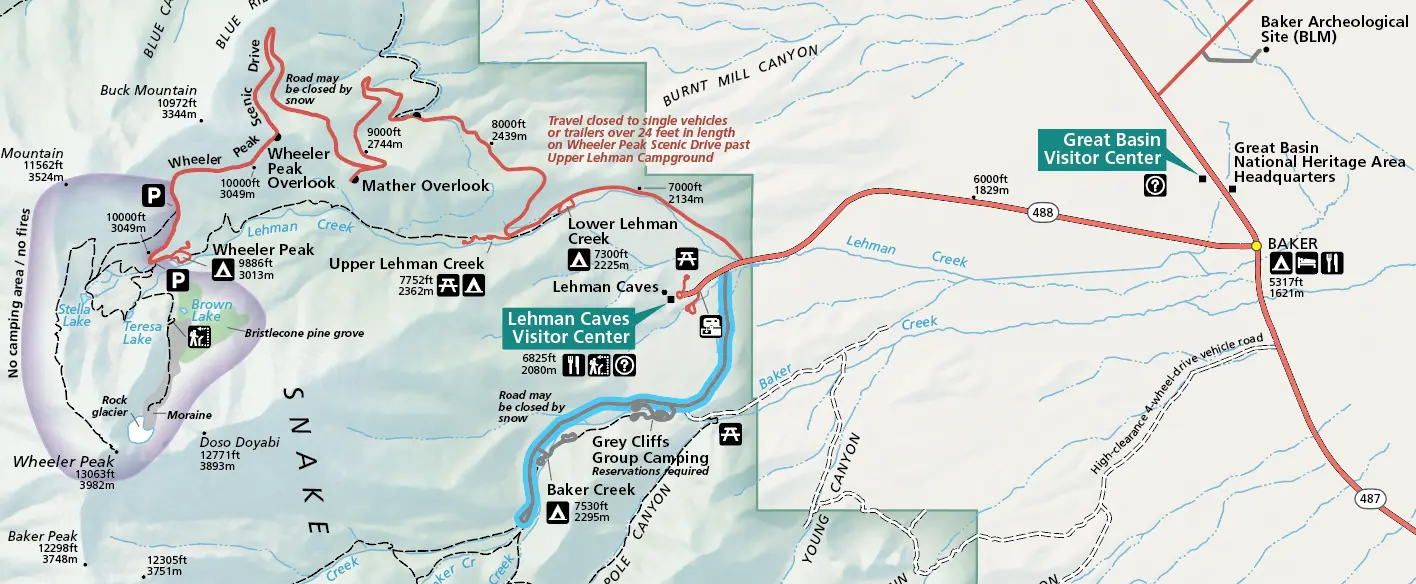
Baker Creek Road highlighted in blue on the National Park Service map. The image shows the affected access corridor, not the prescribed fire perimeter. · NPS · Official image source · No claim to original U.S. Government works.
The October 29 notice scheduled a November 2 start. Its temporary fire restrictions and winter campground closures should not be read as a current reopening report.
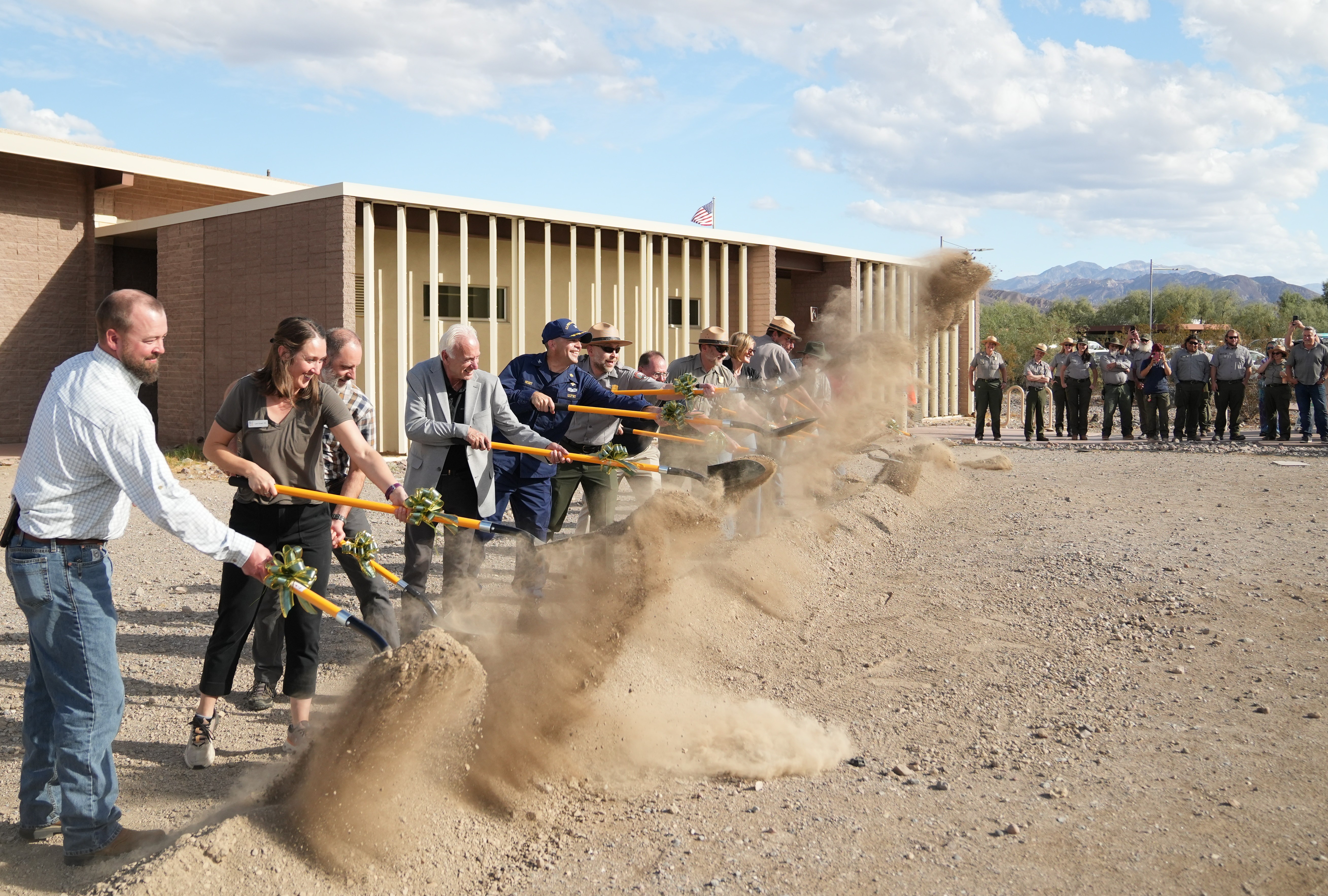
Representatives from the National Park Service, Timbisha Shoshone Tribe and partner organizations mark the start of the Furnace Creek utility project on October 21, 2026. · NPS · Official image source · No claim to original U.S. Government works.
The $69.5 million project will replace or rehabilitate water and wastewater systems across the park; visitors should expect localized outages and reduced parking as work advances.
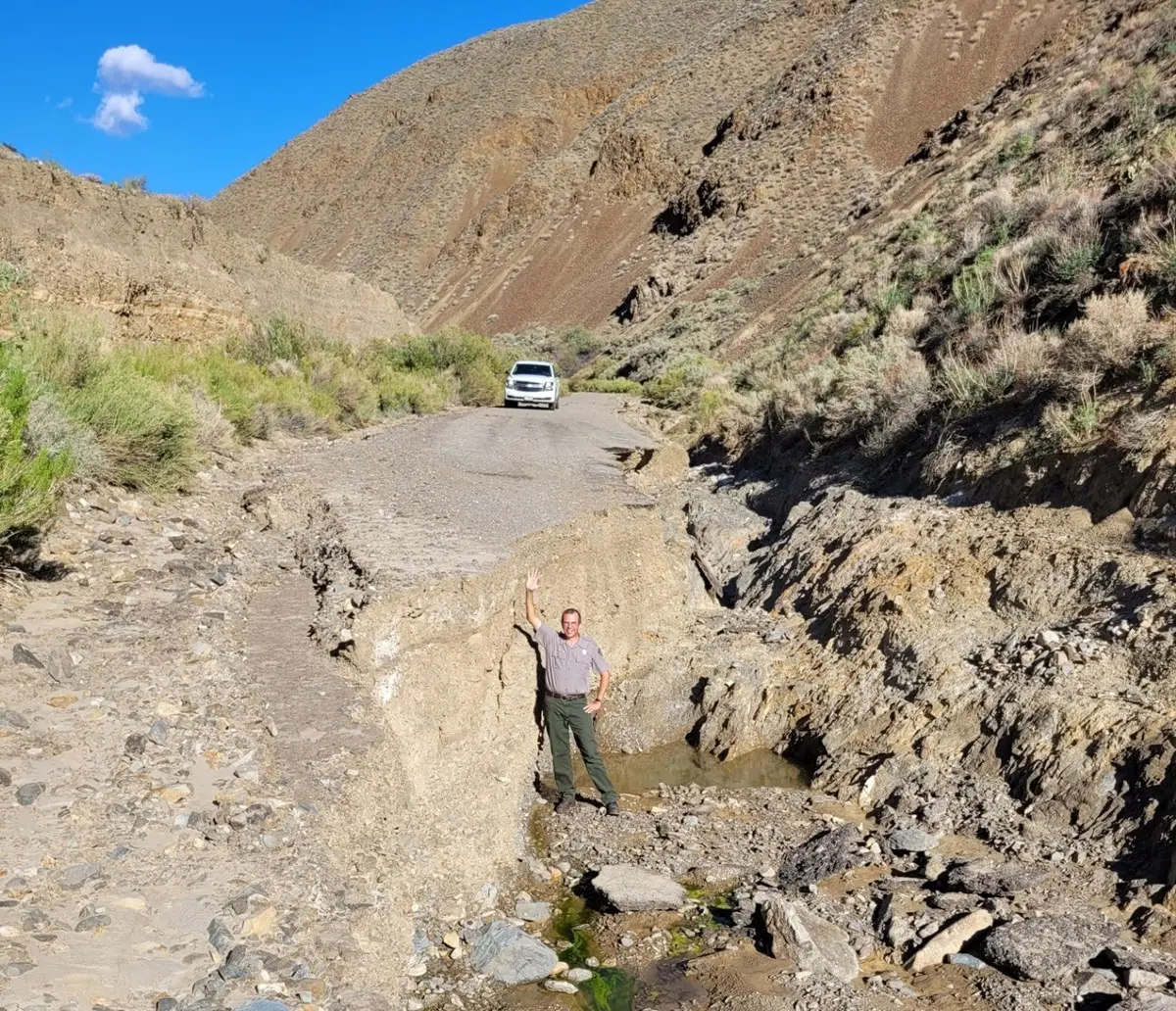
Flood damage has left Lower Wildrose Road washed out and debris-covered in places; the park limits vehicle length and discourages low-clearance travel on the route. · NPS photo / Chris Largent · Official image source · No claim to original U.S. Government works.
A November 1 storm put debris on paved routes and mud across unpaved roads. Most major campgrounds remain open, but NPS strongly discourages dirt-road travel while crews assess damage.
Nevada State Parks now lists the Las Vegas Wash and Big Dig trails as closed after additional rain and flooding. The visitor center, museum and Megafauna Trail remain available.
Experience outdoor thrills, striking landscapes, and brilliant blue waters. This year-round recreation area spreads across 1.5 million acres of mountains, canyons, valleys and two vast reservoirs. Visitors come here for scenic drives, biking, hiking, boating, fishing, camping, and much more.
Follow the routes of mule pack trains across the Southwest on the Old Spanish National Historic Trail between Santa Fe, New Mexico, and Los Angeles, California. New Mexican traders moved locally produced merchandise across what are now six states to exchange for mules and horses.
Follow in the footsteps of over 250,000 emigrants who traveled to the gold fields and rich farmlands of California during the 1840s and 1850s: the greatest mass migration in American history. The California National Historic Trail is over 5,000 miles long and covers portions of 10 states. Step into history along more than 1,000 miles of ruts and traces from travelers and their overland wagons.
In this below-sea-level basin, steady drought and record summer heat make Death Valley a land of extremes. Yet, each extreme has a striking contrast. Towering peaks are frosted with winter snow. Rare rainstorms bring vast fields of wildflowers. Lush oases harbor tiny fish and refuge for wildlife and humans. Despite its morbid name, a great diversity of life thrives in Death Valley.
It is hard to believe that young men once rode horses to carry mail from Missouri to California in the unprecedented time of only 10 days. This relay system along the Pony Express National Historic Trail in eight states was the most direct and practical means of east-west communications before the telegraph.
From the 13,063-foot summit of Wheeler Peak to the sagebrush-covered foothills, Great Basin National Park hosts a sample of the incredible diversity of the larger Great Basin region. Come and partake of the solitude of the wilderness, walk among ancient bristlecone pines, bask in the darkest of night skies, and explore mysterious subterranean passages. There's a lot more than just desert here.
Over the last ~570,000 years, water has transformed the Upper Las Vegas Valley. Tule Springs Fossil Beds National Monument is an urban park that preserves the unique story of this ever-changing environment.