The third, fourth, and fifth creek crossings on the 4WD Only Medano Pass Primitive Road have deep water crossings. Motorists are advised to use caution and exercise sound judgement to the capabilities of their vehicle. NOTE: Access remains unaffected for all other paved road destinations such as the visitor center, dunes parking lot, and campground.
The Rainbow Park Road, Rainbow Park Campground, and Rainbow Park Boat Ramp are closed as of September 25, 2026 due to significant storm damage until repairs are completed, likely through spring of 2027. The 3/4-mile Rainbow Park Road is closed to vehicles from the junction with the Island Park Road to the Rainbow Park Campground and boat ramp. The Island Park Road remains open to Ruple Ranch.
Winter Operating Hours in effect September 14, 2026: the visitor center is open five days a week, Wednesday through Sunday, closed on Monday and Tuesday.
As of August 18th, Great Sand Dunes is under Stage 1 Fire Restrictions. All wood and charcoal fires must be in established fire rings in designated campsites or picnic sites. No other open fires are allowed. Fires MUST BE put out COLD before leaving your site and must not be left unattended. camp stoves and other pressurized gas devices allowed.
Road work will begin on the first four miles of the Main Park Road during the week of September 20 - 26. Expect delays up to 15 minutes. Far View Sites and Cedar Tree Tower are closed for road improvements. Wetherill Mesa Road has compacted gravel for 30 feet; motorcycles should take extra caution on this road.
The voicemail for the main park phone line (970-562-4282) is not functioning reliably. People are advised to call during business hours in order to speak with a ranger.
Speed limits for the park include 30 MPH near the park boundary and Great Sand Dunes Sign, and as low as 10 MPH near the Headquarters and Entrance Station. Speed limits are in place to protect park visitors, pedestrians, and wildlife in the park. Please drive carefully and responsibly.
Sand boarding and sand sled rentals are located in local communities surrounding the park. Visitors are encouraged to arrange rentals BEFORE coming to the park.
The design of the reconstructed fort fails to meet accessibility, fire, and life-safety requirements of 1976. A lack of code compliant components such as emergency lighting, illuminated exit signage, panic hardware on doors, and outwardly swinging exit doors results in a limitation of 49 occupants for visitor operations within the reconstructed fort.
Cyanotoxins are currently present in the Iola Basin. Until further notice, the park recommends that no person or pet swims in, or drinks from, reservoir waters in the Iola Basin. Cyanotoxins may be present in the Cebolla and Sapinero Basins. Use caution when fishing, boating, or recreating in Blue Mesa Reservoir.
Entry into the reconstructed fort is limited to the central plaza on scheduled days. For your safety respect all closures and restrictions. Guided tours provide access into additional areas.
East Portal Road, managed by the U.S. Bureau of Reclamation, will reopen on Saturday, September 19, 2026, by 8:00 a.m. The road was closed on September 14 following forecasts of significant rainfall in the region, which increased the risk of mudslides.
East Portal Road, managed by the U.S. Bureau of Reclamation, will reopen on Saturday, September 19, 2026, by 8:00 a.m. The road was closed on September 14 following forecasts of significant rainfall in the region, which increased the risk of mudslides.
The National Park Service has selected Tobin Roop as superintendent of Black Canyon of the Gunnison National Park and Curecanti National Recreation Area. Roop brings 24 years of National Park Service experience in leadership, resource management, park operations, partnerships and major project management.
The National Park Service has selected Tobin Roop as superintendent of Black Canyon of the Gunnison National Park and Curecanti National Recreation Area. Roop brings 24 years of National Park Service experience in leadership, resource management, park operations, partnerships and major project management.
Thanks to recent significant rainfall, the Stage 1 Fire Restriction Order for Black Canyon of the Gunnison National Park and Curecanti National Recreation Area will be lifted effective Friday, September 18, 2026, at 12:01 a.m.
Thanks to recent significant rainfall, the Stage 1 Fire Restriction Order for Black Canyon of the Gunnison National Park and Curecanti National Recreation Area will be lifted effective Friday, September 18, 2026, at 12:01 a.m.
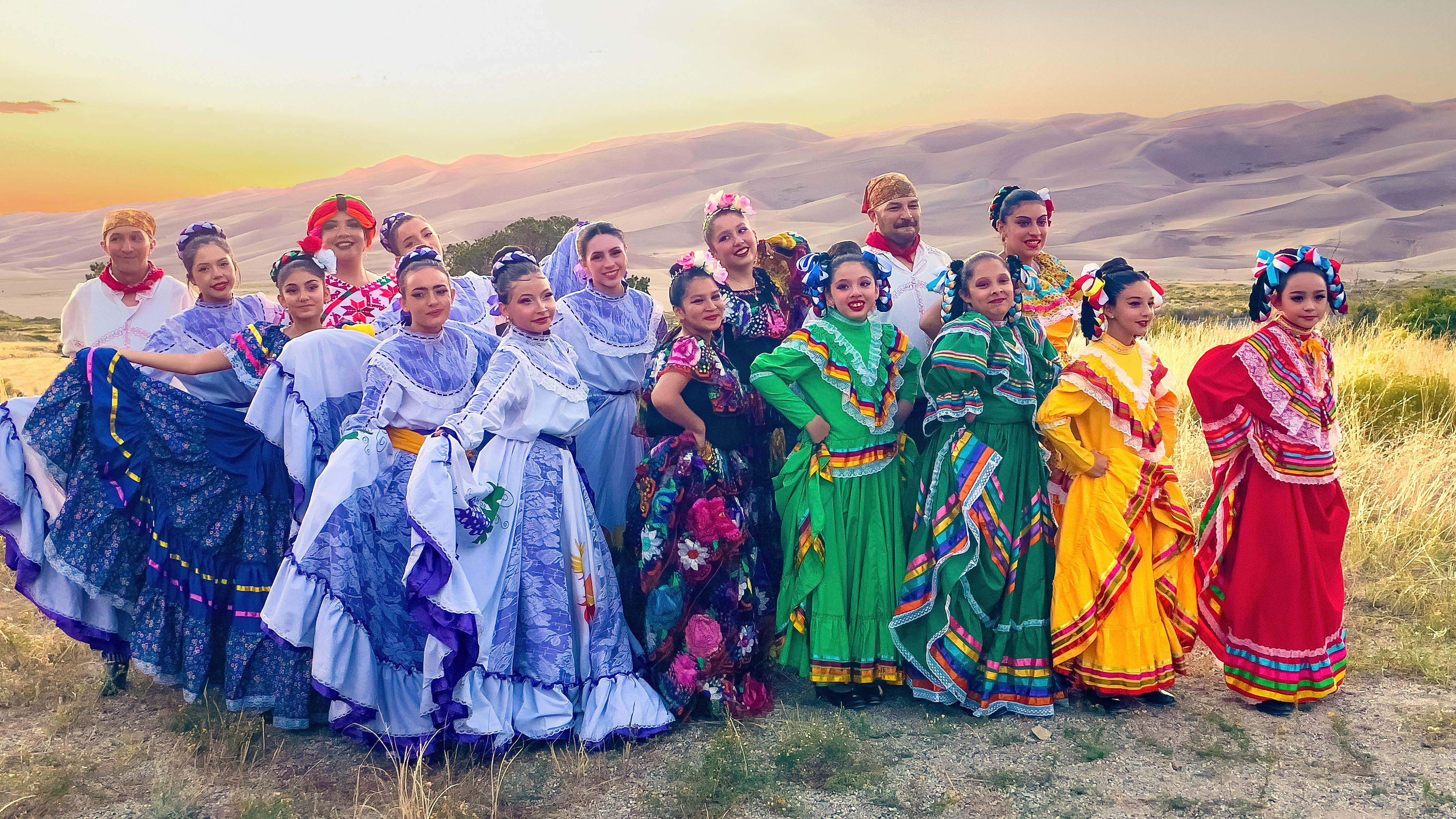
Great Sand Dunes National Park and Preserve and the Sangre de Cristo National Heritage Area welcome visitors to experience the Hispanic culture of the San Luis Valley through a series of music and dance performances Friday, Sept. 18, from 1 to 3:30 p.m. at the Great Sand Dunes Piñon Flats Amphitheater.
Beginning Monday, Sept. 28 through Thursday, Oct. 1, and then again Monday, Oct. 5 through Thursday, Oct. 8, the Glacier Gorge Parking area and Glacier Gorge Trailhead will be closed to all uses including vehicle and shuttle bus access.
East Portal Road, managed by the U.S. Bureau of Reclamation, will open tomorrow September 4, 2026, by 8:00 am. It closed on July 16, 2026, after a significant mudslide. Crews have been working to clear roadways, culverts, drainages, and visitor use areas.
East Portal Road, managed by the U.S. Bureau of Reclamation, will open tomorrow September 4, 2026, by 8:00 am. It closed on July 16, 2026, after a significant mudslide. Crews have been working to clear roadways, culverts, drainages, and visitor use areas.
Due to lower temperatures accompanied by higher humidity, fire danger has moderated across southeastern Utah. Beginning at 12:01 a.m. Friday, September 4, Arches and Canyonlands national parks, along with Natural Bridges and Hovenweep national monuments, will rescind fire restrictions.
MONTROSE, Colo. – The National Park Service invites you to discover your local day and night skies at the 2026 Black Canyon Curecanti AstroFest. Minimal light pollution and expansive public lands result in wonderful clear days and dark night skies at Black Canyon of the Gunnison National Park and Curecanti National Recreation Area and. Come celebrate the skies above at the annual astronomy festival.
The National Park Service invites you to discover your local day and night skies at the 2026 Black Canyon Curecanti AstroFest. Minimal light pollution and expansive public lands result in wonderful clear days and dark night skies at Black Canyon of the Gunnison National Park and Curecanti National Recreation Area and. Come celebrate the skies above at the annual astronomy festival.
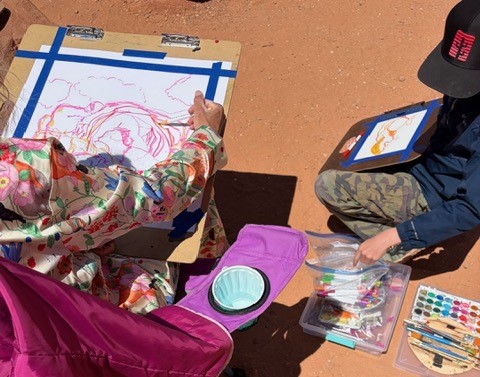
The Southeast Utah Group of parks will accept applications for the 2027 Community Artist in the Parks (CAIP) program September 1 to September 30, 2026.
Black Canyon of the Gunnison National Park will return to Stage 1 Fire Restrictions at 12:01 AM on Friday, August 28, 2026. The restrictions are in alignment with multiple state and federal partners in order to reduce the risk of fire in the region. Curecanti National Recreation Area returned to Stage 1 fire restrictions at 12:01 AM on Friday, August 21, 2026.
Hopi glass artist Ramson Lomatewama is coming to demonstrate at Natural Bridges and Hovenweep National Monuments! Natural Bridges: September 24th - 27th (9am-4pm daily) Hovenweep: October 1st - 4th (9am - 4pm daily) Ramson is an award-winning glass artist who creates his art in his glassblowing studio, Hotevilla Glassworks, atop third mesa on Hopiland. He's been blowing glass for more than 25 years and was a stained-glass artist before that. Before working with glass, Ramson was an educator. He taught elementary, middle, and high school before retiring from North Central College where he taught sociology. Ramson's work is a direct reflection of his upbringing within Hopi culture. All aspects of his work speak to his connection with his history, the Hopi landscape, and his personal interpretation of living his traditional life. Ramson is an active member of his community, both in ceremonies and in service to others. We're honored to have Ramson at these sites demonstrating his gifts and hope you get the chance to make it out to meet him! Thank you to the Friends of Arches and Canyonlands Parks (foacp.org) for making this program possible.
Follow the routes of mule pack trains across the Southwest on the Old Spanish National Historic Trail between Santa Fe, New Mexico, and Los Angeles, California. New Mexican traders moved locally produced merchandise across what are now six states to exchange for mules and horses.
Follow in the footsteps of over 250,000 emigrants who traveled to the gold fields and rich farmlands of California during the 1840s and 1850s: the greatest mass migration in American history. The California National Historic Trail is over 5,000 miles long and covers portions of 10 states. Step into history along more than 1,000 miles of ruts and traces from travelers and their overland wagons.
It is hard to believe that young men once rode horses to carry mail from Missouri to California in the unprecedented time of only 10 days. This relay system along the Pony Express National Historic Trail in eight states was the most direct and practical means of east-west communications before the telegraph.
Amache, also known as the Granada Relocation Center, near Granada, Colorado was one of ten incarceration sites established by the War Relocation Authority during World War II to unjustly incarcerate Japanese Americans. Over 10,000 people, most American citizens, were incarcerated at Amache from 1942 to 1945.
In the 1840s the Arkansas River was the border between territory claimed by the United States and Mexico. Located along the river, Bent's Fort was an adobe trading post on the Santa Fe Trail, where traders, trappers, travelers, and the Cheyenne and Arapaho tribes came together in peaceful terms for trade. Today, a reconstructed fort allows visitors to explore the front line of Westward Expansion.
Big enough to be overwhelming, yet still intimate enough to feel the pulse of time. Come see some of the steepest cliffs, oldest rock, and craggiest spires in North America. Forces of nature and the Gunnison River sculpted this canyon over two million years. The result is a vertical wilderness of rock, water, and sky.
Colorado National Monument preserves one of the grand landscapes of the American West. But this treasure is much more than a monument. Towering monoliths exist within a vast plateau and canyon panorama. You can experience sheer-walled, red rock canyons along the twists and turns of Rim Rock Drive, where you may spy bighorn sheep and soaring eagles.
Three reservoirs and surrounding lands make up this recreation area in western Colorado. It is a landscape of tradeoffs; natural and human made features exist together. Geologic wonders are abundant from the sagebrush shrublands to forests. Visitors can experience the park year-round on both land and water.
150 million years ago, dinosaurs roamed here. Their fossils are still embedded in the rocks. Today, mountains, desert, and rivers flowing in canyons support a variety of life. Petroglyphs reveal the lives and connections of Indigenous people to this land. Homesteaders and outlaws found refuge here. Whether your passion is science, adventure, history, or scenery, Dinosaur offers much to explore.
Beneath a grassy mountain valley in central Colorado lies one of the richest and most diverse fossil deposits in the world. Petrified redwood stumps up to 14 feet wide and thousands of detailed fossils of insects and plants reveal the story of a very different, prehistoric Colorado.
The tallest dunes in North America are the centerpiece in a diverse landscape of grasslands, wetlands, forests, alpine lakes, and tundra. Stay on a moonless night to experience countless stars in this International Dark Sky Park!
Open 24 hours a day, 7 days a week year-round.
There are no timed entries or reservations to visit.
Hovenweep preserves six prehistoric sites built between 1200 and 1300 CE which may have served as ceremonial centers. Explore a variety of structures, including multistory towers perched on canyon rims and balanced on boulders. The construction and attention to detail will leave you marveling at the skill and motivation of the builders.
For over 700 years, the Ancestral Pueblo people built thriving communities on the mesas and in the cliffs of Mesa Verde. Today, the park protects the rich cultural heritage of 27 Pueblos and Tribes and offers visitors a spectacular window into the past. This World Heritage Site and International Dark Sky Park is home to over a thousand species, including several that live nowhere else on earth.
Rocky Mountain National Park's 415 square miles (265,807 acres) encompasses a spectacular range of mountain environments. From meadows found in the montane life zone to glistening alpine lakes and up to the towering mountain peaks, there is something for everyone to discover. Along the way explore over 300 miles of hiking trails and incredible wildlife viewing.
On November 29th, 1864, Chiefs Black Kettle, White Antelope, Left Hand and others were encamped with around 750 Arapaho and Cheyenne people in a valley by the Big Sandy Creek. A hope for peace, brought forth by Black Kettle was in the balance. It was a tragic day where the blood of the Cheyenne and Arapaho was shed, and a painful memory for generations of Native Americans was made.
You can almost hear the whoops and cries of "All's set!" as trail hands hitched their oxen to freight wagons carrying cargo between western Missouri and Santa Fe, New Mexico. Follow the Santa Fe National Historic Trail through five states and you'll find adventure and evidence of past travelers who made this remarkable trip before you!
Yucca House National Monument preserves a large unexcavated pueblo with a stunning setting in Montezuma Valley, nestled between Mesa Verde and Ute Mountain. Since Yucca House was protected as a national monument in 1919, it has remained largely untouched, offering intrepid visitors a sense of discovery and preserving the pueblo's beauty and integrity for future generations.