
STATE & NATION TRAVEL · news
Death Valley begins three-year utility overhaul at Furnace Creek
By Bob LePage · Published October 28, 2026
The $69.5 million project will replace or rehabilitate water and wastewater systems across the park; visitors should expect localized outages and reduced parking as work advances.
Official announcement: National Park Service · October 22, 2026
Source: National Park Service October 22 project groundbreaking release
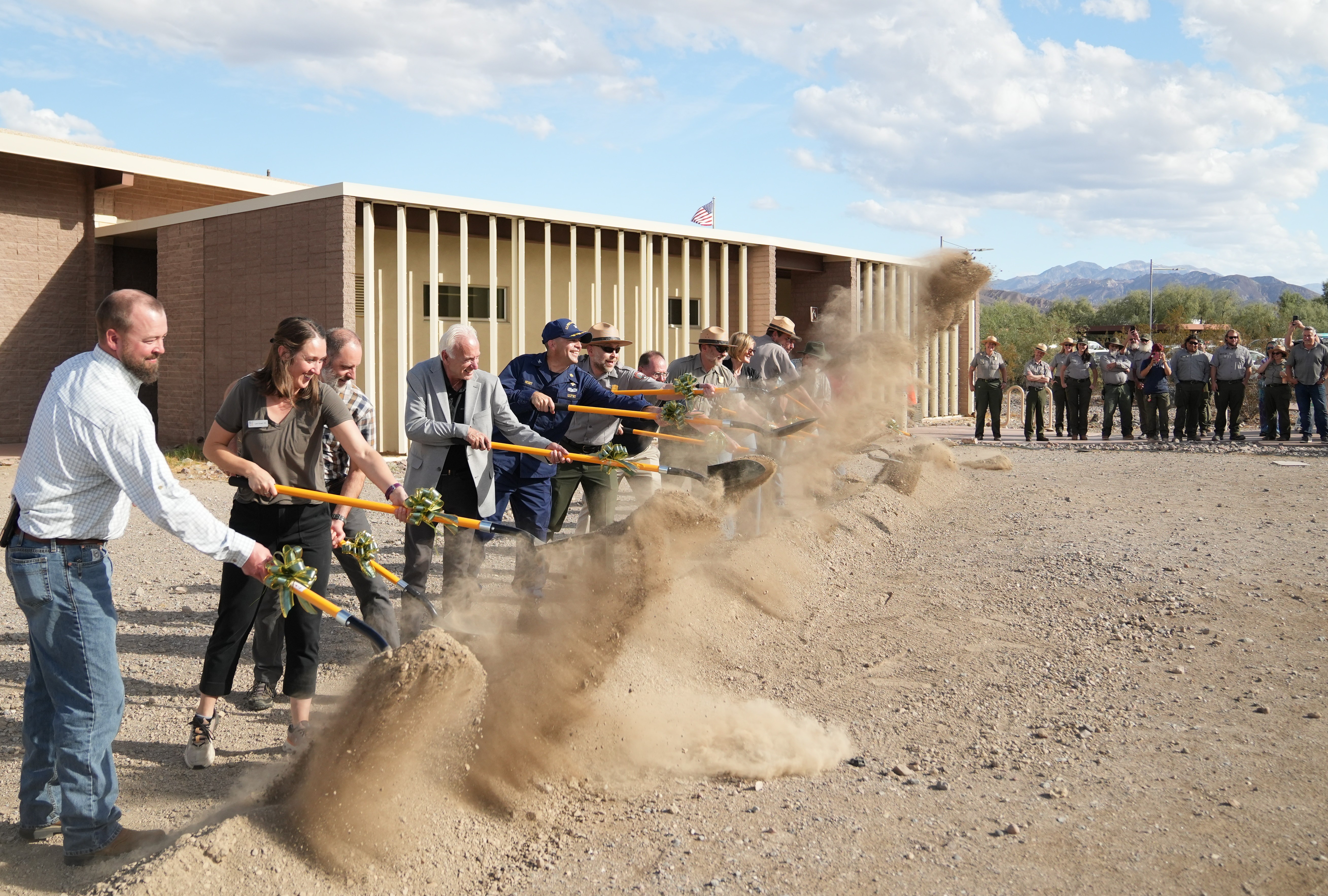
Death Valley National Park has started a three-year, $69.5 million overhaul of water and wastewater infrastructure serving Furnace Creek, Cow Creek and nearby park operations. The National Park Service marked the start of construction at Furnace Creek Visitor Center on October 21 and said the work will serve visitors, employees, park residents, the Timbisha Shoshone Tribe and commercial lodging and services in the Furnace Creek area.
The project calls for replacing the Cow Creek water-treatment building, rehabilitating the Furnace Creek treatment plant and upgrading the shared wastewater facility. NPS also plans to replace more than 30 miles of water and sewer lines, drill new wells, modernize sewage lift stations and improve wastewater ponds. Much of the system dates to the 1960s, and the agency says failures have caused water outages, boil-water notices, sewage spills and temporary campground closures in recent years.
Construction is planned in phases so the park can remain in operation. NPS says short, localized water outages and temporary parking reductions may occur, with service changes and closures posted through the park's current-conditions page. The agency's July project announcement described the same work as a fall start; the October release confirms that the project has moved from planning to construction.
The groundbreaking took place in Furnace Creek, California, but Death Valley National Park extends across the California-Nevada line. This article is therefore routed to both states while keeping the construction location distinct from the park's wider footprint. The park's October 25 road report also lists storm-related closures that are separate from the utility project, reinforcing the need to check conditions rather than treating the groundbreaking notice as a complete access report.
What Travelers Need to Know
Check the official current-conditions page shortly before entering the park and again during a multi-day stay. As of the park's October 25 update, flooding had closed Ubehebe Road and Beatty Cut-off Road, while Emigrant Campground and its restrooms were closed indefinitely for water-system repairs. Those conditions can change independently of the three-year construction schedule.
Expect localized water shutoffs or reduced parking near active work zones, but do not infer a park-wide closure from the project announcement. NPS says the park remains open 24 hours a day; Furnace Creek Visitor Center is normally open daily from 8 a.m. to 5 p.m. Individual roads, campgrounds and services can have different hours or closures.
No reservation is required to enter Death Valley. The current standard entrance charges are $30 for a private vehicle, $25 for two motorcycles and $15 per person arriving on foot or bicycle, each valid for seven days. The park is cashless for entrance and campground fees, so buy online in advance if cash would otherwise be the only payment option.
Bring enough drinking water for the planned route and do not rely on a single facility remaining available during construction. Use the official road map and conditions page to choose an alternate stop if a water outage, parking reduction, flood closure or campground repair affects the itinerary.
About the Location
Death Valley National Park lies in California's Inyo and San Bernardino counties and Nevada's Esmeralda and Nye counties. NPS describes it as the largest national park in the lower 48 states, with mountain ranges, dunes, canyons, dry lake beds, springs and exposed rocks recording a long geologic history. The area became a national monument in 1933 and was redesignated a national park in 1994.
Furnace Creek is the park's principal visitor-services hub and the location of its year-round visitor center. It is also within the homeland of the Timbisha Shoshone, whose families have lived in the valley for centuries and established a tribal center at Furnace Creek in 1936. In an extremely dry landscape with widely separated facilities, reliable treatment plants, wells and pipelines directly affect campgrounds, lodging, visitor services and the people who live and work inside the park.
Official sources
- National Park Service October 22 project groundbreaking release
- National Park Service July 29 project announcement
- National Park Service Death Valley alerts and road conditions
- National Park Service Death Valley operating hours
- National Park Service Death Valley entrance fees
- National Park Service Death Valley people and Timbisha Shoshone background
- National Park Service Death Valley geodiversity and establishment background