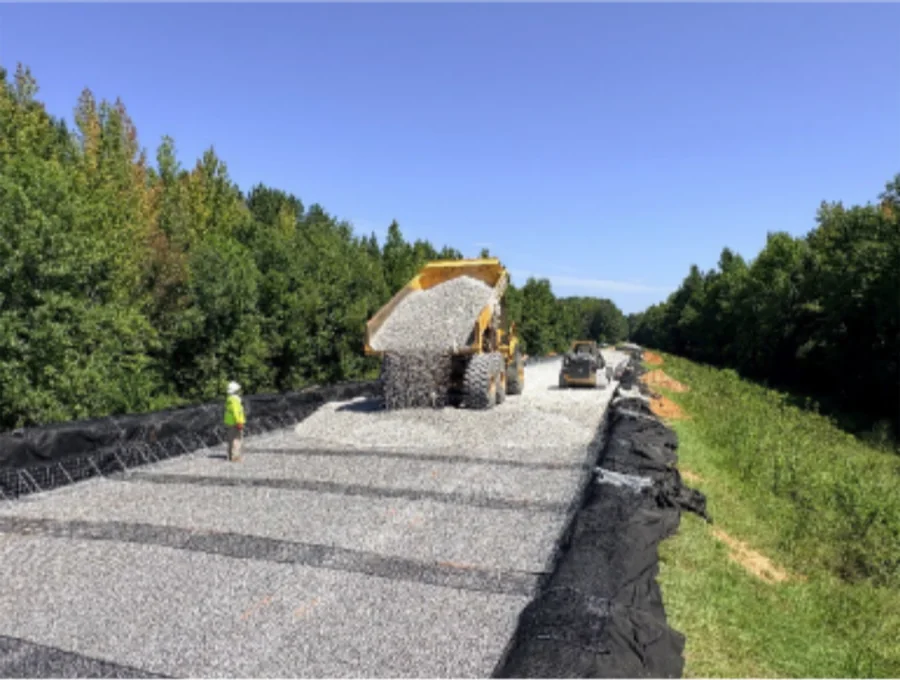
Crews lay new gravel during full-depth reconstruction on the Natchez Trace Parkway in Mississippi. · NPS Photo/K. Tyler · Official image source · No claim to original U.S. Government works.
The parkway is open again from milepost 135 to 159, while work shifts north to an Attala County segment that is scheduled to remain closed into March 2027.
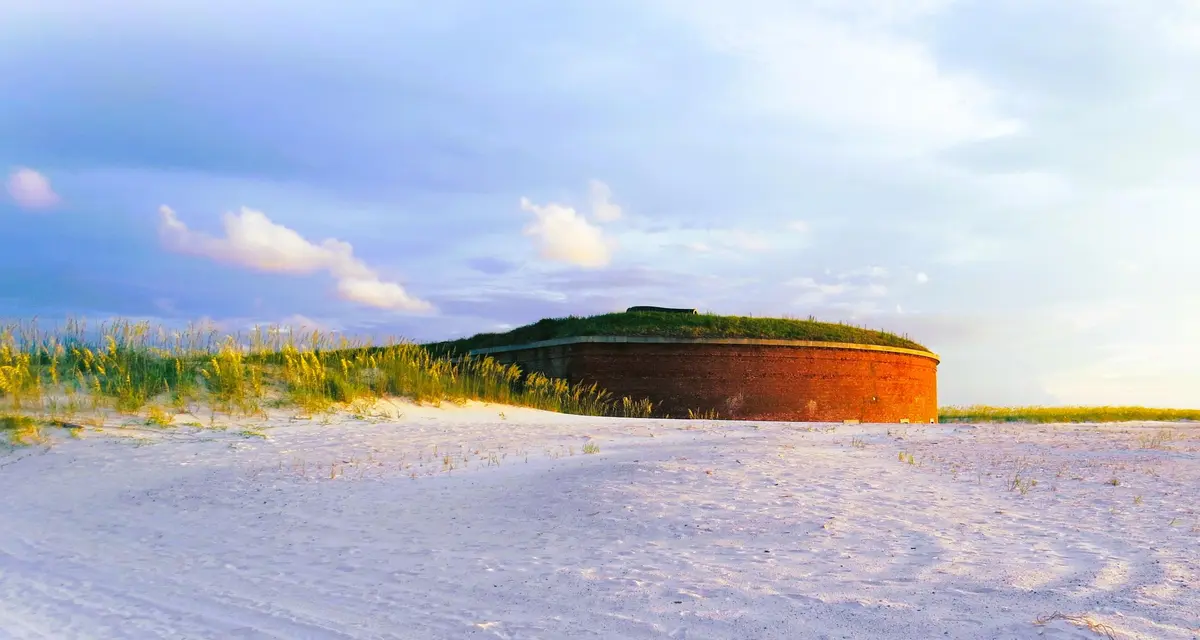
Fort Massachusetts on Ship Island in the Mississippi district of Gulf Islands National Seashore (NPS file photograph). · NPS/Bernstiel · Official image source · No claim to original U.S. Government works.
Naval Live Oaks reopened October 26, completing the seashore's storm-access return across Florida and Mississippi while unrelated facility restrictions remain in effect.
The Natchez Trace Parkway is a 444-mile recreational road and scenic drive through three states. It roughly follows the "Old Natchez Trace," a historic travel corridor used by American Indians, "Kaintucks," European settlers, slave traders, soldiers, and future presidents. Today, people can enjoy a scenic drive as well as hiking, biking, horseback riding, and camping along the Parkway.
The Natchez Trace National Scenic Trail is five sections of hiking trail running roughly parallel to the 444-mile long Natchez Trace Parkway scenic motor road. The foot trails total more than 60 miles and offer opportunities to explore wetlands, swamps, hardwood forest, and the history of the area.
Millions of visitors are drawn to the Gulf of America for Gulf Islands National Seashore's emerald coast waters, magnificent white beaches, fertile marshes and historical landscapes. Come explore with us today!
In 1955, 14-year-old Emmett Till traveled to Money, Mississippi, to visit relatives. He was kidnapped, tortured, and murdered after reportedly whistling at a white woman. His mother, Mamie Till-Mobley, insisted on an open-casket funeral near their hometown of Chicago. Her brave decision let the world see the racist violence inflicted upon her son and set the Civil Rights Movement into motion.
To Confederate President Jefferson Davis, Vicksburg was the "nailhead that holds the South's two halves together." President Abraham Lincoln remarked "Vicksburg is the key" to victory, and could be the north's lifeline into the south. As the federals closed in on the Fortress City, they were met by a ring of forts with over 170 cannon. The resulting battle would determine the war's outcome.
The Confederate victory at Brices Cross Roads was a significant victory for Major General Nathan Bedford Forrest, but its long-term effect on the war proved costly for the Confederates.
Medgar and Myrlie Evers were partners in the civil rights struggle. The assassination of Medgar Evers in the carport of their home on June 12, 1963, was the first murder of a nationally significant leader of the American Civil Rights Movement, and it became a catalyst for passage of the Civil Rights Act of 1964. Myrlie Evers continues to promote issues of racial equality and social justice.
Discover the history of all the peoples of Natchez, Mississippi, from European settlement, African enslavement, the American cotton economy, to the Civil Rights struggle on the lower Mississippi River.
Visit the sites of the most epic struggle in the Western Theater of the Civil War. Nearly 110,000 American troops clashed in a bloody contest that resulted in 23,746 casualties; more casualties than in all of America's previous wars combined. Explore both the Shiloh and Corinth battlefields to discover the impact of this struggle on the soldiers and on the nation.
In July, 1864, federal forces, including men from the United States Colored Troops, marched into Tupelo, Mississippi. Disorganized Confederate soldiers fought fiercely but could not overpower the federal troops. Neither side could claim a clear victory, but Union troops had succeeded in their main goal: keeping the Confederates away from Union railroads in Tennessee.