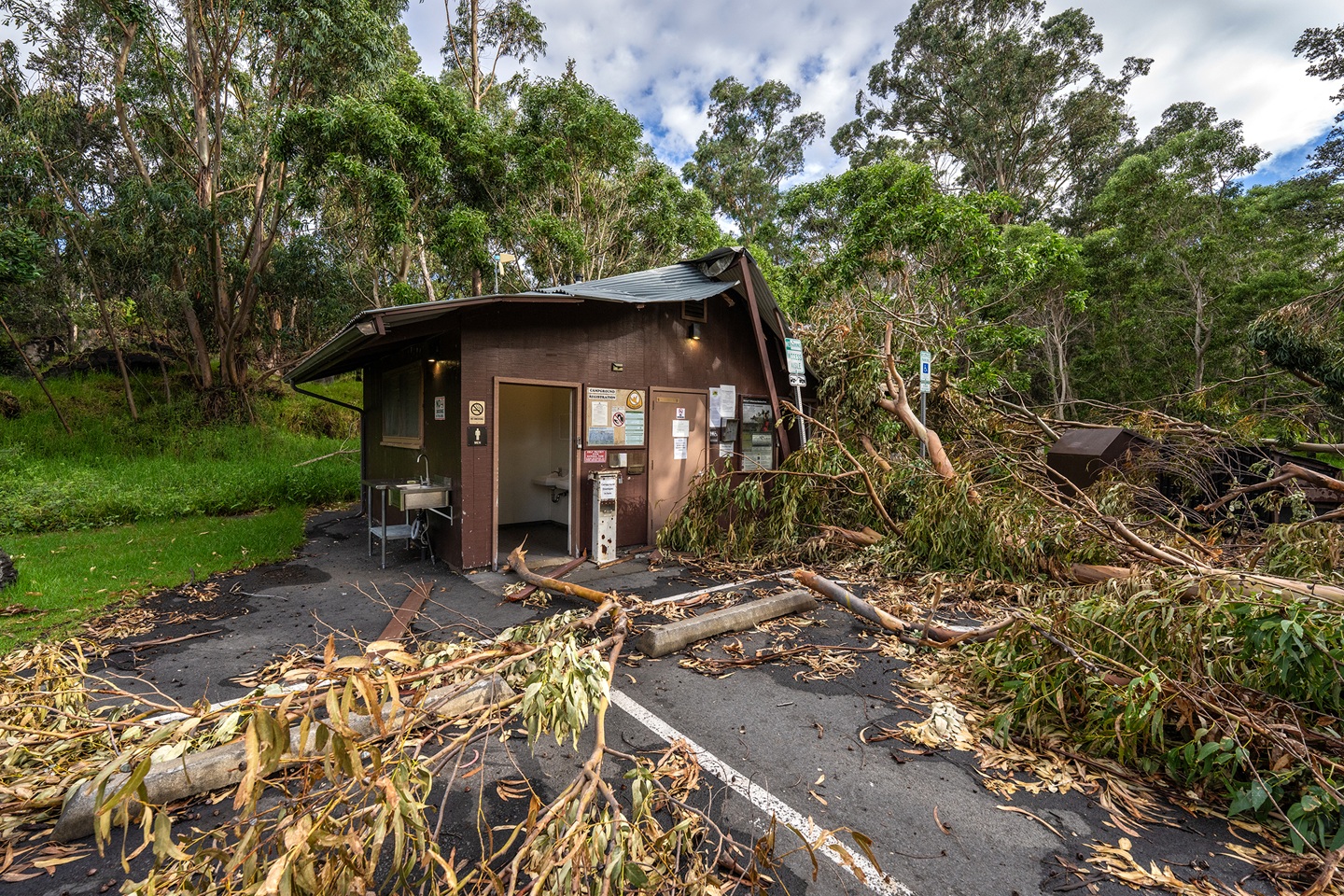
Kīpahulu District restrooms and water stations are closed for critical emergency repairs. Vault toilets are available at Kīpahulu Campground. Day and overnight visitors are urged to bring enough drinking water for entire stay.
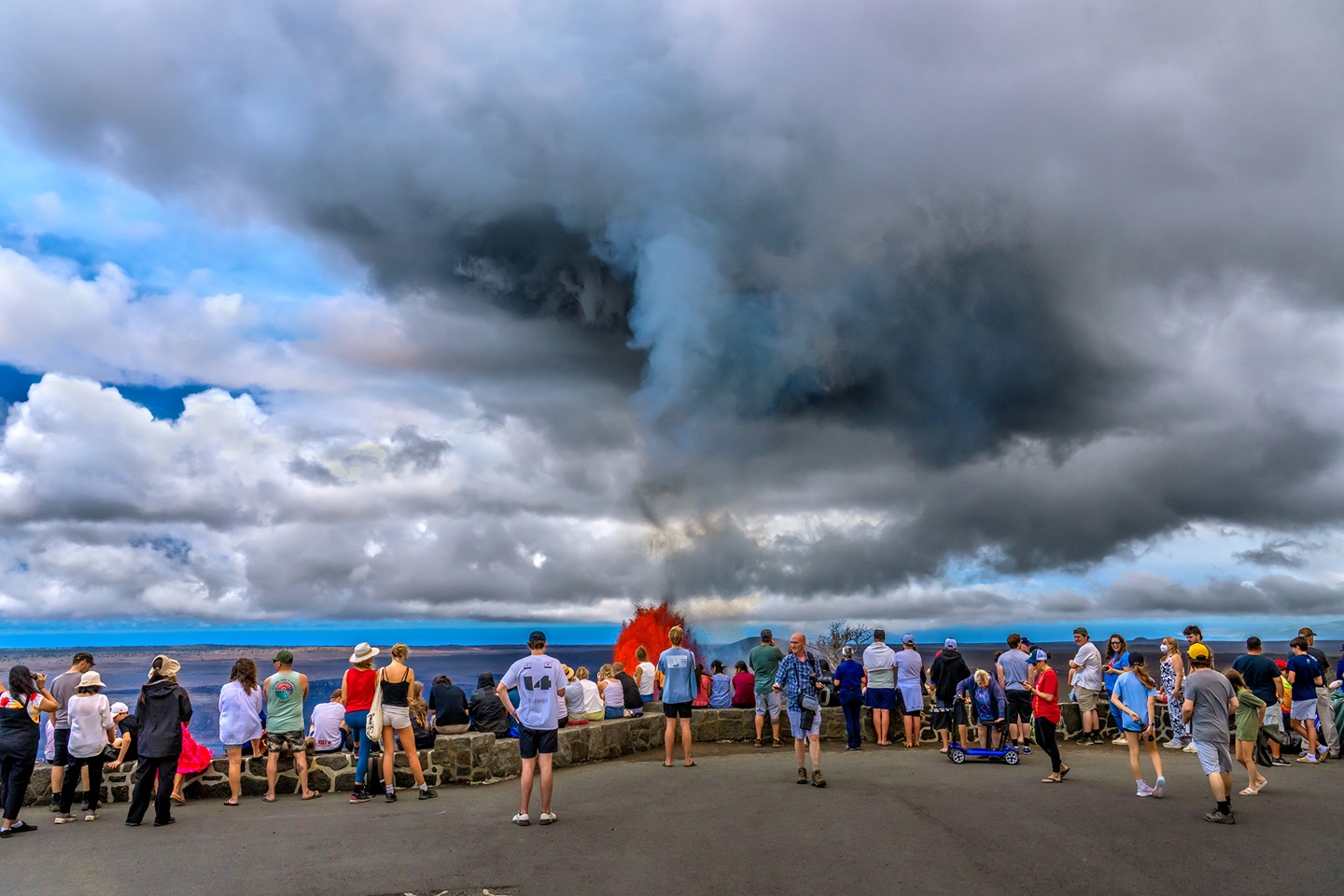
Due to increased earthquakes below the summit of Kīlauea and volcanic unrest, the Keanakākoʻi area is temporarily closed for safety. This includes old Crater Rim Drive, the overlooks near Keanakākoʻi crater and Crater Rim Trail to Keanakākoʻi crater. Devastation parking lot remains open.
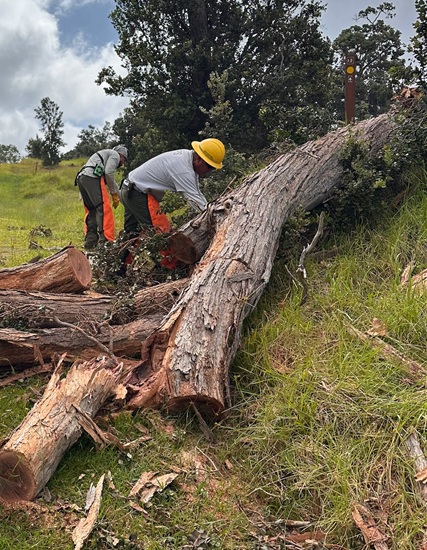
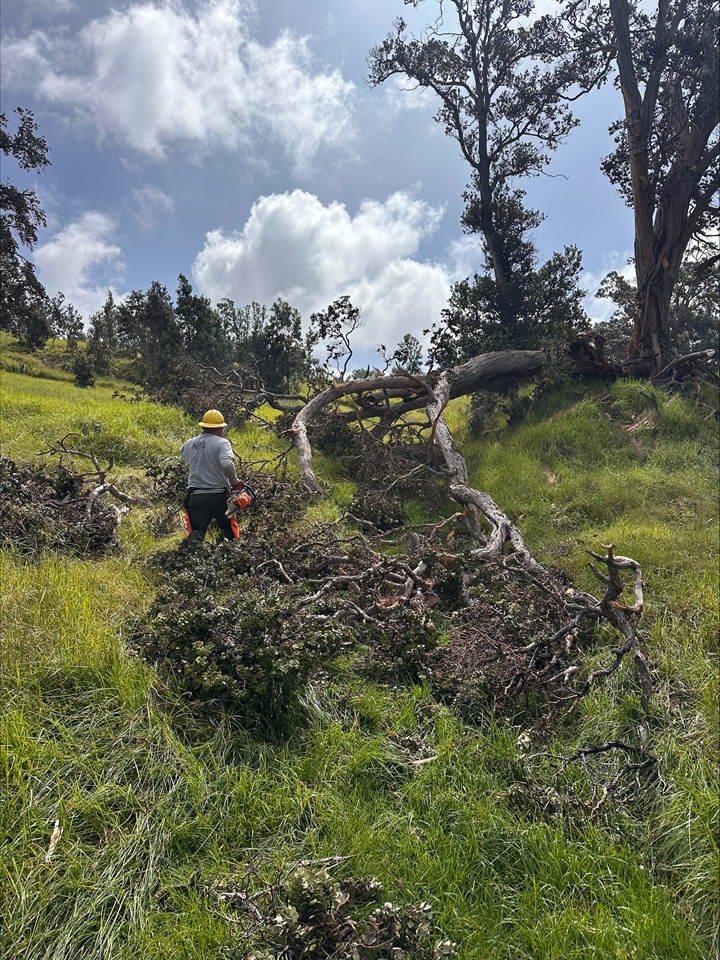
Mauna Loa Road will be closed to all use from the second cattle guard (about two miles past Kīpukapuaulu) to Mauna Loa Lookout for tree removal starting September 23 through October 29, 2026. The tree work will prepare the area for the Mauna Loa Road Rehabilitation Project. Vehicles, bicyclists and pedestrians will not be allowed during the closure.
Hilina Pali Road beyond the Maunaiki Trailhead will be closed to motorized vehicles on September 14, 2026 from 6 a.m. to 4:30 p.m. Monday through Thursday for shoulder work. Hikers, bicyclists and backcountry permit holders will be given access but should expect delays while heavy machinery works on the road. The entire road will be open to all use outside of those hours including weekends and holidays. The work is expected to be complete by November 19, 2026.
Kīpukapuaulu Trail remains closed due to numerous hazardous trees and hanging limbs resulting from several recent storms. Managers are developing a plan and will reopen the trail when it is safe.
Puʻuhonua o Honaunau National Historical Park has reopened. However, please note that the Puʻuhonua area of the park remains closed until further notice. Additionally, the 1871 Trail beyond Alahaka Ramp is also closed.
Upper Kahuku Road remains closed beyond the boot decontamination station due to storm damage. The Visitor Contact Station and most trails in the Kahuku Unit are now open following Hurricane Lala. Kahuku Road above the Lower Palm Trailhead is deeply rutted by the recent heavy rains. A 4WD is recommended to access areas above the Lower Palm Trailhead.
The Sulphur Banks Bridge is damaged and closed until further notice. The Haʻakulamanu area, boardwalk and Sulphur Banks Trail are open and accessible from the west side near Steam Vents.
Phone service at Puʻukoholā Heiau National Historic Site is currently unavailable. If you need to contact the park, please email us at puhe_info@nps.gov and a staff member will respond as soon as possible. We appreciate your patience while service is being restored.
Volcanic ash, rock and glassy strands (tephra) is present at Kīlauea summit and can irritate your skin, eyes and respiratory system. For your safety, do not handle it. Eye protection, long sleeves, long pants, a hat, closed-toe shoes and a dust mask are recommended.
Annual and lifetime passes are not currently available for purchase at Puʻuhonua o Hōnaunau National Historical Park. As an alternative, you can purchase an annual pass online.
Beginning Monday, January 12, 2026 Haleakalā Visitor Center (summit district) parking lot will have limited parking due to a water infrastructure project. Expect traffic delays. The project will last several months.
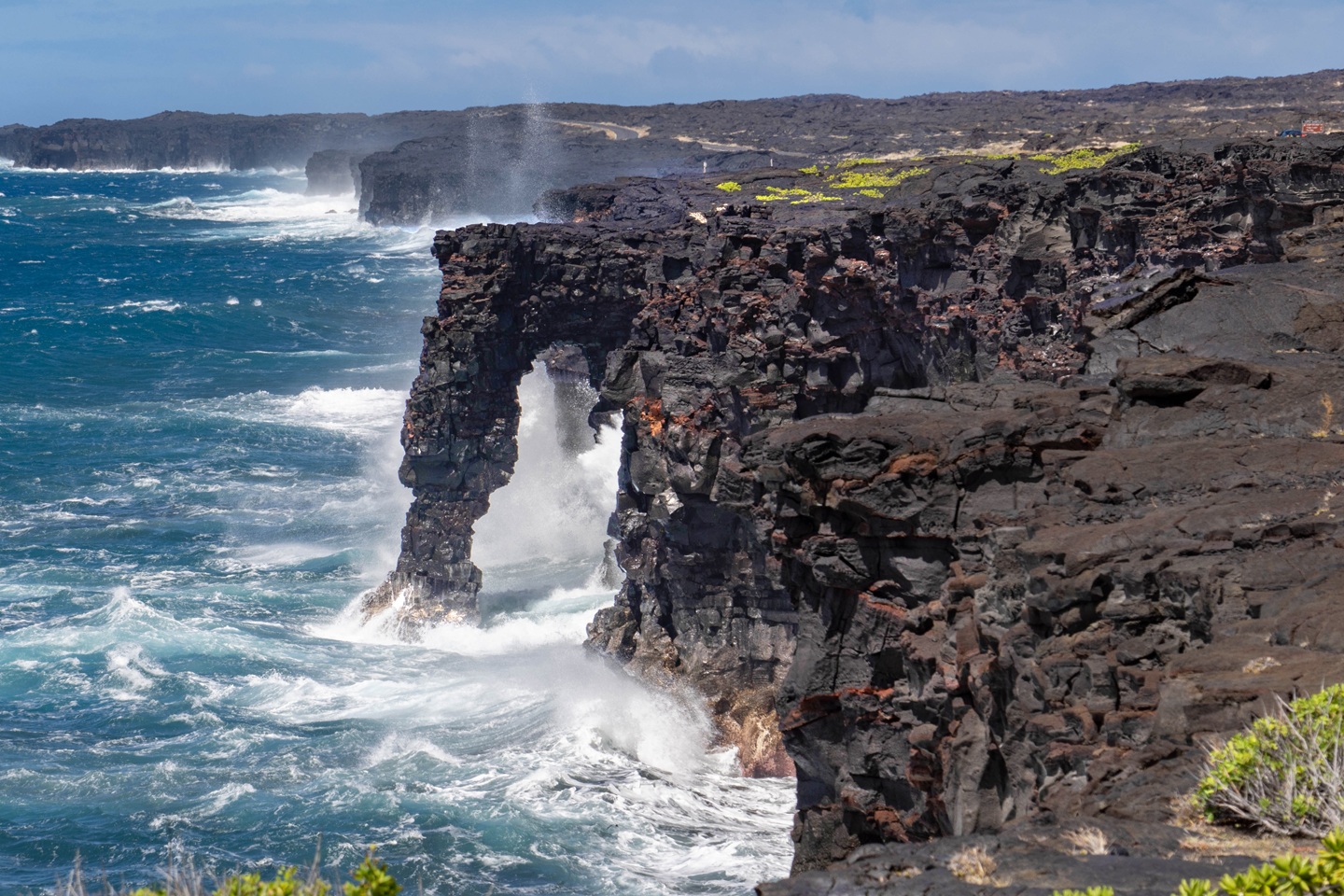
The iconic Hōlei Sea Arch in Hawaiʻi Volcanoes National Park has collapsed into the Pacific Ocean, marking the latest transformation of the park’s remote and rugged coastline.
Hawaiʻi Volcanoes National Park will temporarily close most park areas ahead of Tropical Storm Nolo, which is forecast to bring heavy rain, flooding and strong, damaging winds to Hawaiʻi Island.
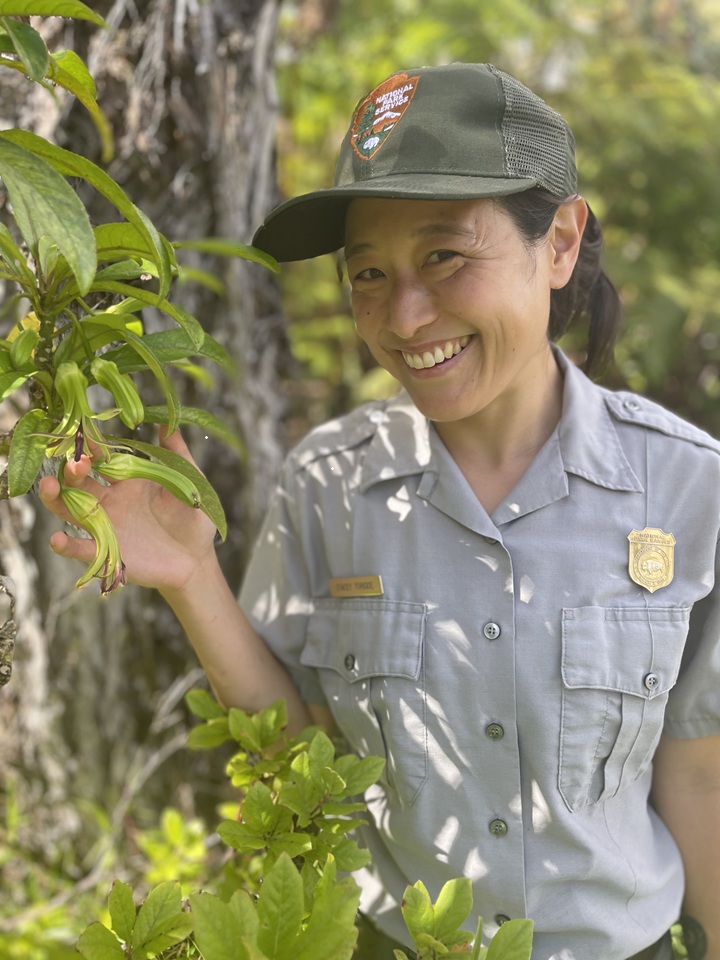
Hawaiʻi Volcanoes National Park Ecologist Stacey Kehaulani Torigoe will receive the prestigious National Park Service 2026 Director’s Award for Natural Resource Management. The Director’s Award recognizes the outstanding contributions of National Park Service staff in understanding, protecting, and managing natural and cultural resources in and around national parks.
The Kahuku Unit in Hawaiʻi Volcanoes National Park will reopen to visitors on Thursday, September 3 after being closed due to damage from heavy rain and strong winds during Hurricane Lala.
Most of Hawaiʻi Volcanoes National Park is now open following temporary closures due to a hurricane, a tropical storm and heavy rain that reduced fire risk.
Hawaiʻi Volcanoes National Park, including the Kahuku Unit, will temporarily close Friday, August 21 by 5 p.m. ahead of a new storm system that could again bring torrential rainfall and high winds to Hawaiʻi Island as early as Saturday.
Park rangers reopened Crater Rim Drive West from the park entrance to Uēkahuna at the summit of Kīlauea volcano around 10 a.m. Monday morning, August 17, following a multi-day hurricane closure.
Hawaiʻi Volcanoes National Park is planning parkwide closures ahead of Tropical Storm Lala which is forecast to bring heavy rains, flooding and strong damaging winds to Hawaiʻi Island.
Pearl Harbor National Memorial will partner with Manhattan Project National Historical Park Sites to remember the 81st anniversary of the atomic bombing of Hiroshima and Nagasaki
For the first time, Kalaupapa National Historical Park will offer public tours starting July 9, 2026. The tours will be provided twice a week, and reservations can be made beginning June 26.
Discover the rare anchialine ecosystems of Kaloko-Honokohau National Historical Park! Join us for a 15-20 minute interpretive talk on shrimp and anchialine pools at the Kaloko-Honokōhau National Historical Park Visitor Center. These pools are windows into a hidden world where fresh and saltwater mix underground. In this talk, you'll get to know the unique plants and animals that thrive in these pools, including the surprisingly charismatic native ‘ōpae‘ula (red shrimp). You'll also learn how we can protect these fragile ecosystems and the life they support.
The sunrise orientation features a brief overview of the summit area, important rules for visiting the park, and the cultural significance of this sacred place. The orientation talk may be followed by an oli , or Hawaiian chant, to welcome the rising sun and the beginning of a new day.
Join a park ranger for engaging programs that explore the geology, Native Hawaiian history, and unique native plants and animals. Programs are offered daily at 10:30 a.m. and 12:30 p.m. Programs last approximately 30-45 minutes. Program starts at the U.S. Flagpole located at the Kilauea Military Camp. Please note: Programs may be canceled due to hazardous weather or volcanic conditions. Stop by the Welcome Center for the latest updates, locations, and details.
This tour offers a special trip to the USS Utah and Oklahoma Memorials on Ford Island with park rangers. Participants will board a motor coach from the Pearl Harbor Visitor Center to travel to Ford Island for a 90-minute round-trip tour to some of the most fascinating “hidden gems” of Pearl Harbor National Memorial. Pearl Harbor National Memorial interprets and preserves sites and remnants connecting to the December 7, 1941, Japanese military attack on Oʻahu, which killed more than 2,300 military and civilian personnel, and compelled the United States' entry into World War II. Beyond the striking white walls of the USS Arizona Memorial, the Site and its staff preserve the quiet USS Oklahoma and USS Utah Memorials, which share the story those battleships suffered, and six historic officer bungalows which remind visitors of neighborhood life before and during the day of infamy. If you require a wheelchair or ADA accessible bus, contact perl_info@nps.gov immediately
The game of skills and strategy can be learened in minutes, but may take a lifetime to master. More than 100 years ago, the fame and skill of the Hawaiian Konane players reach the ears of the world. The king of england sent his champion draughts players around the world challenging all comers to the game of checkers. King Kamehameha sent his "Queens" team to meet the challenge, and beat the best of the British Empire at their own game. It was said that King Kamehameha was an excelent player, sometimes beating his own opponent in one move. Early visitors to Hawai'i wrote of the popularity of the game and noted that Kamehameha would sit long hours over the game. His skill was so great that his chiefs and queens were no match for him. Come join Hawai'i Parks Association member Ed, and learn the history behind this intense and focused Makahiki game of Konane. Every Tuesdays from 10:00am-1:00pm at the park visitor center.
Hawaiian cultural practitioner Pomai Brown brings the art of crafting Hulu Aliʻi (Chiefly Featherwork) to life. These feathered capes and cloaks once worn exclusively by our aliʻi (nobility). Made of ōlona fiber netting and tens of thousands of bird feathers, 'ahu 'ula were used for spiritual and physical protection of the wearer during battle and ceremony. The woven caps, adorned with 'Haka' (crown embellishments), are showcased in museums worldwide, featuring thousands of red, yellow, and black feathers, with unique designs noting the wearer's geneology and rank. Each bundle are tied with care and carrying the mana of the birds that provided them. No two 'ahu 'ula were identical, through many contain similar patters, noting familial relations between the wearers. This demonstration offers a meaningful connection to our kūpuna and the rich history of this sacred place. Please join Pomai Brown every Wednesdays at the visitor center from 10:00am-1:00pm in learning an Hawaiian craft. For more information, contact park staff at 808-882-7218 X1011 or visit the parks social media pages @puukoholaheiaunhs. Hope to see you there!
Discover how people have understood and recorded volcanism for generations—through Native Hawaiian moʻolelo (stories), chants, and historical accounts.. This engaging ranger program blends geology with Native Hawaiian knowledge, offering a powerful look at how eruptions have shaped both the landscape and Hawaiian history. Programs are offered daily at 10 a.m., 11 a.m., 1 p.m., and 2 p.m. Ranger talk is approximately 20 minutes. Meet the ranger at Uēkahuna parking area. Please note: programs may be canceled due to hazardous weather or volcanic conditions. Stop by the Welcome Center for the latest updates, locations, and details.
Join us in Kahuku to learn from Volcano woodworker and artist Tom Pico about different types of koʻi and the methods of making and assembling these very important Hawaiian tools. The koʻi is a basalt woodworking tool traditionally used by Kānaka Maoli, and kākoʻi (adze-making) was one of the essential Hawaiian cultural practices. Large koʻi were used for cutting trees and shaping canoes while smaller ones were used to carve things such as bowls, weapons, kiʻi and small tools. When: Saturday, September 26 at 9:30 a.m. Where: Kahuku Unit Visitor Contact Station
Join a park biologist for a free guided walk in Hosmer Grove to discover Maui's honeycreepers. Learn about their behaviors and the ongoing efforts to save these endangered species. Connect with nature and be part of the mission to save the forest birds.
Established in 2000 to preserve, protect and interpret traditional Native Hawaiian culture and natural resources, Ala Kahakai National Historic Trail is a 175-mile corridor encompassing a network of culturally and historically significant trails. This "trail by the sea" traverses wahi pana (storied landscapes), ancient Hawaiian sites and over 200 ahupua?a (traditional land divisions).
This special place vibrates with stories of ancient and modern Hawaiian culture and protects the bond between the land and its people. The park also cares for endangered species, some of which exist nowhere else. Come visit this special place - renew your spirit amid stark volcanic landscapes and sub-tropical rain forest with an unforgettable hike through the backcountry.
Hawai‘i Volcanoes National Park protects some of the most unique geological, biological, and cherished cultural landscapes in the world. Extending from sea level to 13,680 feet, the park encompasses the summits of two of the world's most active volcanoes - Kilauea and Mauna Loa - and is a designated International Biosphere Reserve and UNESCO World Heritage Site.
In 2026, Honouliuli National Historic Site is commemorating the 80th year since Honouliuli Internment Camp closed with community events that will take place throughout the year. Stay tuned on our website or social media to learn more and get involved.
When Hansen's disease (leprosy) was introduced to the Hawaiian Islands, King Kamehameha V banished all afflicted to the isolated Kalaupapa Peninsula on the north shore of Molokai.
Since 1866, more than 8,000 people, mostly Hawaiians, have died at Kalaupapa. Once a prison, Kalaupapa is now a refuge for the few remaining residents who are cured but were forced to live their lives in isolation.
Along the western coastline of the Island of Hawai?i lies the hot, rugged lava of Kaloko-Honokohau. This seemingly barren and harsh landscape does not appear to be suitable for human existence, and yet, long before written history, the Hawaiian people built a thriving settlement upon this ?a?a lava.
At Pearl Harbor National Memorial, we honor the lives affected by the December 7, 1941, attack. This pivotal moment in global history marked the United States' entry into World War II, impacting nations and communities worldwide. Join us in reflecting on this shared history and its lasting significance in the pursuit of peace.
Imagine you had just broken the sacred laws, the kapu, and the only punishment was death. Your only chance of survival is to elude your pursuers and reach the Pu?uhonua, a place of refuge. The Pu?uhonua protected the kapu breaker, defeated warriors, as well as civilians during the time of battle. No physical harm could come to those who reached the boundaries of the Pu?uhonua.
How many places in America can you walk in the footsteps of a king? Where else has a stranded sailor risen up to become a great chief over an entire island? Where else can you experience the culminating event of a people, foretold from centuries past? Where else can you stand on a beach and watch as sharks pass over a submerged temple? Experience all this and much more – only at Pu'ukohola Heiau!