
STATE & NATION TRAVEL · news
Marsh-Billings-Rockefeller plans rolling trail closures for hazard-tree work
By Bob LePage · Published November 2, 2026 · Updated November 13, 2026
Correction, November 13: The winter guidance now distinguishes the park's approximately four-mile free multi-use route from trails where skiing or snowshoeing requires a Nordic ticket or pass. The earlier wording was too broad. The November 2–20 tree-work dates are unchanged.
Short sections of five Woodstock-area routes may close for as long as an hour at a time through November 20 while crews remove dangerous trees.
Official announcement: National Park Service · October 28, 2026
Source: National Park Service October 28 trail-closure notice
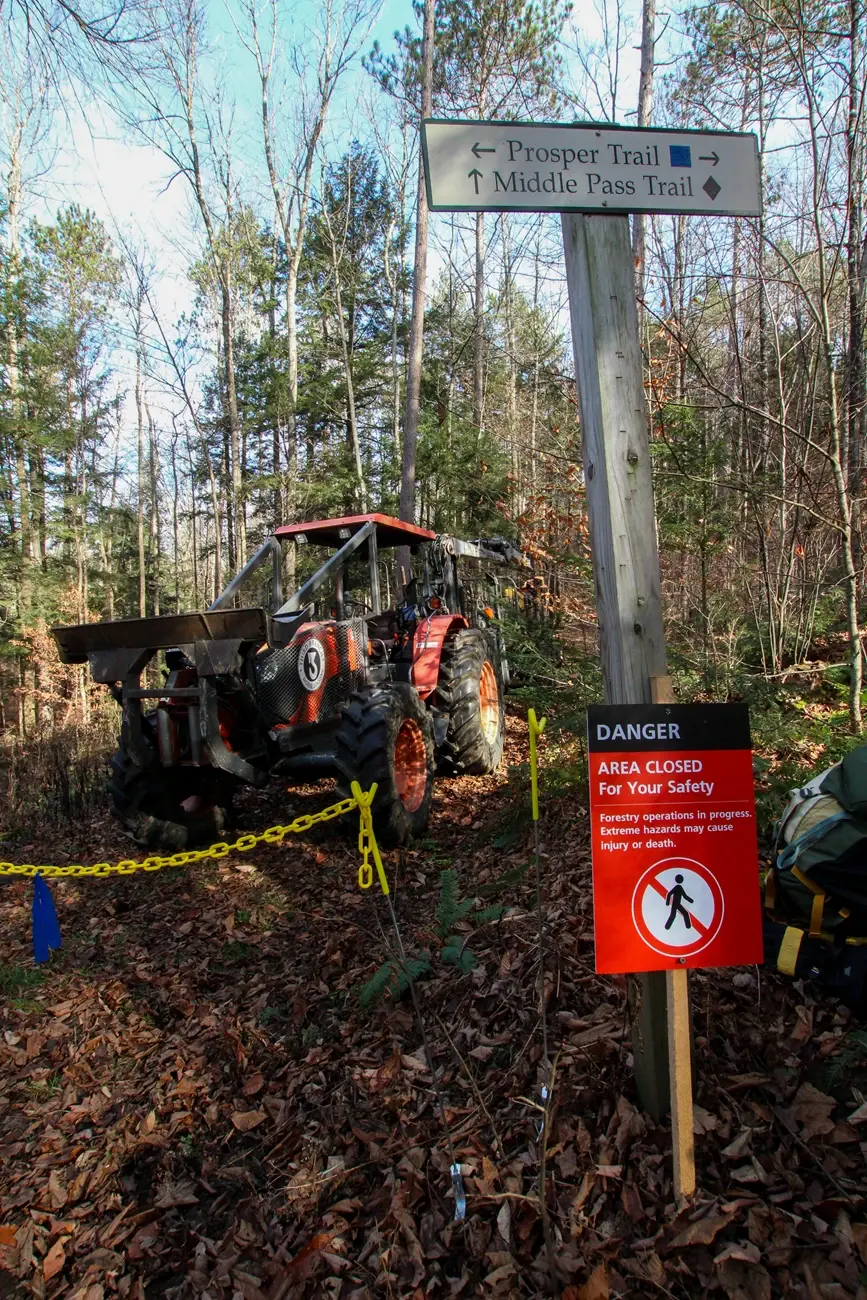
Marsh-Billings-Rockefeller National Historical Park may temporarily stop hikers on parts of five routes from November 2 through November 20 while forestry crews remove hazardous trees. The National Park Service says the work affects Mountain Road, Upper Meadow Road, Sugarhouse Road Loop, McKenzie Road and Prosper Trail.
The park is not announcing a continuous closure of every listed route. Crews will use barriers around active felling areas, and a section may be unavailable for up to one hour at a time. Daily timing depends on where work is underway, so the practical effect can vary during the three-week period.
The work begins as the park enters its quiet season. Grounds and trails remain open during daylight hours, but the Carriage Barn Visitor Center, mansion and other park buildings closed after October 31 and are scheduled to reopen around Memorial Day weekend. Visitors should plan for a self-guided outing even when the intended trail is available.
Mount Tom Forest is a working landscape as well as a place to hike. The NPS winter guide notes that timber harvesting continues there. The hazard-tree operation affects recreation within that managed forest; it is not a closure of the entire historic estate.
What Travelers Need to Know
Check the official park page on the day of the hike or call 802-457-3368 before setting out. The notice identifies the affected routes and date range, but active work determines which short section is actually stopped at a given time.
Download the NPS trail map before arrival because cell service is limited. Respect every barrier and wait for staff to reopen the route; do not walk around a tree-felling closure or assume a quiet work site is safe to enter.
Use the free visitor parking at Billings Farm & Museum on Old River Road unless the park directs otherwise. The normal walk to the park crosses Elm Street and climbs a short, steep hill. Visitors who cannot manage that approach can use the small accessible parking area behind the mansion.
Park grounds have no entrance fee and are open from dawn to dusk. Park buildings are closed for the quiet season, with reopening planned around Memorial Day weekend. Regular ranger programs resume in late May.
Winter trail access has a free option. The park designates about four miles along Mountain Road, Pogue Loop and Mount Tom Road for walking, skiing and snowshoeing without a fee. Outside that free corridor, skiers and snowshoers need either a Woodstock Nordic Center day ticket or a season pass. Keep winter walks within the designated multi-use route. Confirm snow cover and grooming with the Nordic Center before planning a ski trip.
About the Location
The park sits just outside Woodstock village in central Vermont. Visitors generally park at Billings Farm & Museum off Route 12, cross Elm Street on foot and climb a short hill to the national park. More than 20 miles of carriage roads and trails extend through Mount Tom Forest and connect with other Woodstock-area paths.
The site preserves an estate shaped by George Perkins Marsh's early environmental thinking, Frederick Billings' forest rehabilitation and later stewardship by Mary and Laurance Rockefeller. The Rockefellers donated the property to the National Park Service in 1992, creating a park where conservation history, a working forest and a historic mansion share the same landscape.
Official sources
- National Park Service October 28 trail-closure notice
- National Park Service closure map and work details
- National Park Service quiet-season operating guidance
- National Park Service winter multi-use trails and ticket rules
- National Park Service hiking and trail information
- National Park Service directions, parking and accessibility
- National Park Service conservation history and people