
STATE & NATION TRAVEL · alerts
El Morro posts October 18 winter schedule, with Tuesdays and Wednesdays closed
By Staff Writer · Published October 16, 2026
The New Mexico monument’s campground stays open, but that does not give campers after-hours trail access. Headland restoration adds separate limits.
Official announcement: National Park Service · October 15, 2026
Source: NPS October 15 operating update and current conditions
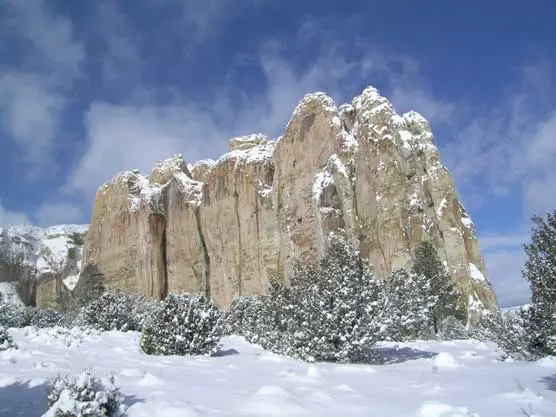
Travelers adding El Morro National Monument to a New Mexico road trip need to check the day of the week as well as the arrival time. NPS’s October 15 operating update lists a winter season running from October 18, 2026, through May 27, 2027. During that period, the visitor center and trails operate Thursday through Monday, 9 a.m.–5 p.m. Mountain Time, with Tuesday and Wednesday closures. The first such closed dates after the listed seasonal change are October 20 and 21.
The posted summer schedule runs through October 17 and allows daily visits during the same hours. Winter’s change is therefore a loss of two visiting days each week, not an invitation to use trails when the visitor center is shut. NPS prohibits hiking after hours and on closed days, explaining that the restrictions protect culturally sensitive resources.
Trail restoration creates an additional planning constraint. The park’s active alert closes the southern part of the Headland Trail, ends admission to that trail at 2:30 p.m. and requires hikers to be off trails by 4:45 p.m. The general conditions page gives a 4 p.m. last start for the shorter Inscription Loop and a 5 p.m. parking-lot closure. Plan around the earlier trail-clearance instruction rather than treating the parking deadline as extra hiking time.
Camping follows a different calendar. NPS lists the nine-site campground as open around the clock throughout the year, free and available by first-come self-registration rather than reservation. That does not open the monument’s trails to overnight guests: no trails begin at the campground, and the same visitor-center and trail restrictions still apply.
What Travelers Need to Know
Choose an open day and arrive well before the relevant trail cutoff. The park also lists Thanksgiving Day, December 25 and January 1 as visitor-center and trail closures. Confirm weather, restoration access and the day’s instructions with the visitor center at 505-783-4226, extension 801; do not assume a complete Headland circuit is available.
The park’s directions describe a 42-mile drive on New Mexico Highway 53 from Interstate 40 exit 81 at Grants. Allow for that drive before choosing a late-afternoon hike, and use the official directions rather than relying on a destination name alone.
Bring drinking water and verify campground water service before an overnight stay. The campground page says its spigots operate seasonally and are shut off when freezing nights begin; that general rule is not confirmation that water will be available on your camping date. NPS describes cell service as sporadic, so make arrangements before arriving.
No entrance ticket or reservation is required for the monument, according to NPS. Camping is also free, but a first-come site is not a guaranteed vacancy. RVs have no hookups and are limited to 27 feet overall, including a towing vehicle and trailer.
About the Location
El Morro stands in western New Mexico’s high-desert landscape, where a shaded water source beneath a sandstone cliff became a stopping place along an east–west travel route. Its rock preserves symbols and inscriptions left by Ancestral Puebloan people, Spanish travelers and later American arrivals. The visit is about a protected cultural landscape, not simply reaching a viewpoint before sunset.
Above that travel corridor, Atsinna Pueblo dates to about 1275 CE. NPS describes a community that drew on food and water in the surrounding valley and built with local stone. The mesa-top remains and the cliff-side inscriptions represent different layers of the site’s history; restoration and controlled trail hours help preserve access without treating those resources as an unrestricted walking area.