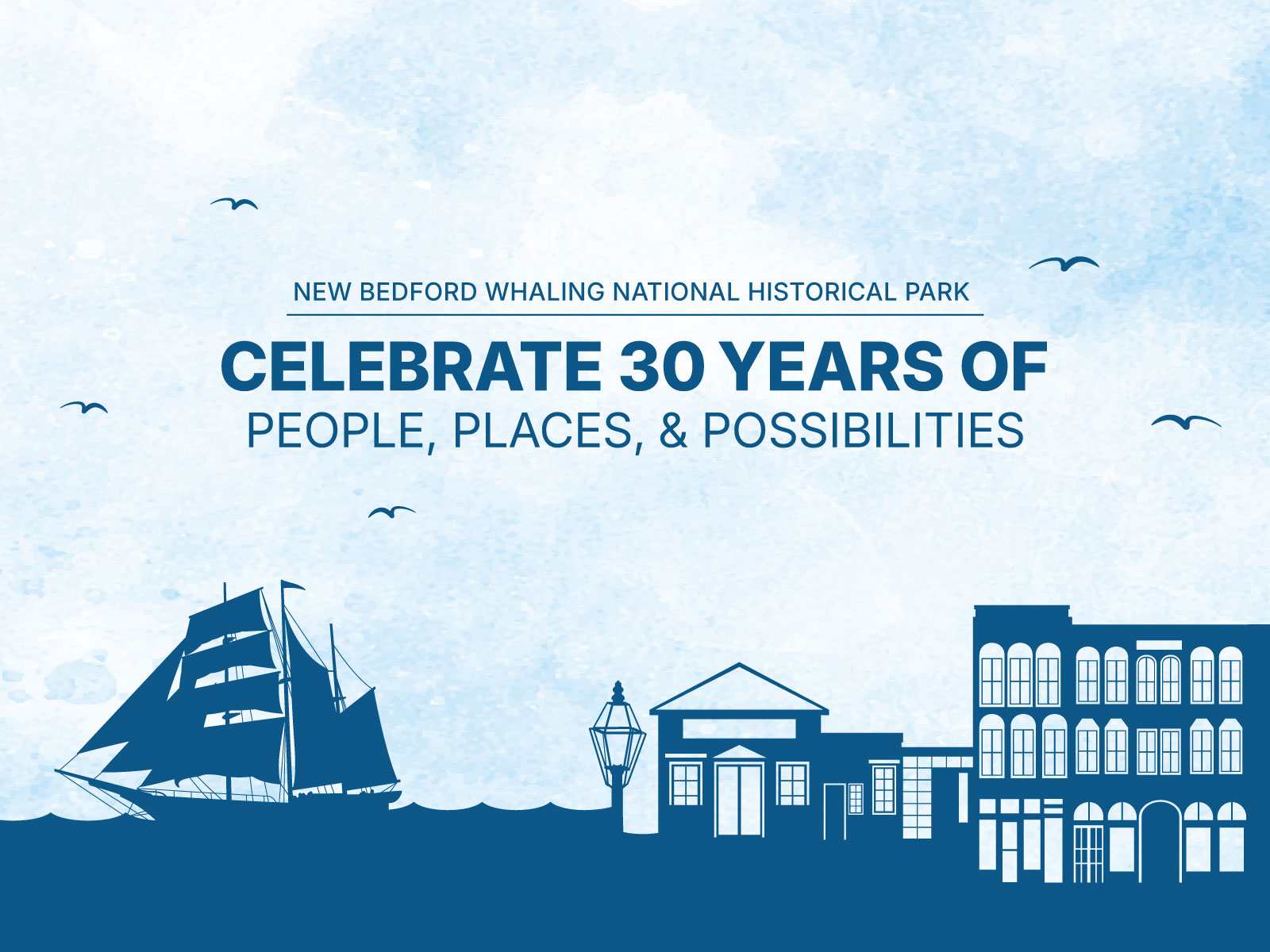
New Bedford Whaling National Historical Park’s 30th-anniversary graphic pairs the port’s maritime setting with its People, Places, and Possibilities theme. · NPS Photo · Official image source · No claim to original U.S. Government works.
The Massachusetts park’s anniversary program runs from afternoon crafts through an evening presentation by the Iñupiat Heritage Center. A stamp activity continues through October 2027.
For two centuries, American whale oil lit the world -- illuminating and powering the start of the industrial revolution and laying the groundwork for a truly global economy. This two-hour film tell s the riveting and extraordinary story of the American whaling industry, from its origins off the coast of New England, through the great golden age of deep-ocean whaling, to the industry's spectacular demise.
Step into history and discover the story of New Bedford, the world’s whaling capital. Explore how this bustling seaport connected New Bedford to a global maritime economy, where whalemen traveled around the globe and helped shape a city known for industry, commerce, and innovation.
Explore the importance of New Bedford Harbor from the 1600s to the present day on this walking tour through one of New England’s historic working waterfronts. Learn how the harbor supported maritime trade, fishing, and whaling while contributing to major periods of American history, including the Revolutionary War, the Civil War era, and New Bedford’s rise as the world’s whaling capital. Discover how the harbor connected New Bedford to regional, national, and global networks that continue to shape the city today.
Step into history and discover the story of New Bedford, the world’s whaling capital. Walk historic streets and explore how this bustling seaport connected New Bedford to a global maritime economy, where whalemen traveled around the globe and helped shape a city known for industry, commerce, and innovation.
Explore the stories of people who arrived in New Bedford during the height of the whaling industry, each bringing their own experiences, skills, and aspirations. Discover how New Bedford’s maritime economy and growing industries connected the city to people and places around the world, shaping opportunities that drew whalemen, merchants, craftspeople, immigrant communities, and freedom seekers seeking work, opportunity, and a new beginning. Learn how whaling, trade, and industrial growth helped shape New Bedford and influenced the people who built lives here during a period of profound change.
Join us for an Underground Railroad Walking Tour exploring New Bedford’s connection to the Underground Railroad and the individuals who sought new opportunities and freedom in the city. The Underground Railroad was an informal network of people, communities, and transportation routes that assisted individuals escaping slavery. During the 1800s, New Bedford became an important destination because of its maritime economy, employment opportunities connected to the whaling industry, and support networks that included free Black residents, formerly enslaved people, abolitionists, maritime connections, and established community networks. On this tour, discover stories of people who built new lives in New Bedford, contributed to the city’s industries and neighborhoods, and shaped the history of the region. Learn how New Bedford’s role as an international port city connected people, commerce, and ideas during a period of major change in American history. Walk through historic streets. Explore significant places. Discover stories that remain part of New Bedford’s history today.
Explore New Bedford through the experiences of Frederick Douglass and Herman Melville, who both walked the streets of this historic port city in 1841. After escaping slavery, Frederick Douglass settled in New Bedford, where he found employment, community, and opportunities that influenced his future work as an abolitionist, writer, and public speaker. Herman Melville also found inspiration in New Bedford’s maritime culture and whaling industry. His experiences contributed to the setting and themes later reflected in Moby-Dick , where he described New Bedford as a city shaped by maritime commerce and global connections. Their experiences reflect how New Bedford’s industries, waterfront, and community shaped lives while connecting this port city to the wider world. Follow in their footsteps and learn how New Bedford shaped two influential figures whose writings and experiences continue to connect New Bedford to the world today.
Step into the world of the whaling industry and discover how whale products supported everyday life during the 1800s. Explore how blubber, baleen, and bone became valuable resources used in homes, manufacturing, and industry, connecting New Bedford to a growing global economy.
Explore the stories of people who arrived in New Bedford during the height of the whaling industry, each bringing their own experiences, skills, and aspirations. Discover how New Bedford’s maritime economy and growing industries connected the city to people and places around the world, shaping opportunities that drew whalemen, merchants, craftspeople, immigrant communities, and freedom seekers seeking work, opportunity, and a new beginning. Learn how whaling, trade, and industrial growth helped shape New Bedford and influenced the people who built lives here during a period of profound change.
Explore the experiences of women on whaleships and discover how they contributed to life aboard nineteenth-century whaling voyages. Through journals, firsthand accounts, and historical records, learn how women managed shipboard responsibilities, assisted with navigation, served in medical roles, and connected with communities building relationships with other whaling families around the world.
Explore New Bedford through the experiences of Frederick Douglass and Herman Melville, who both walked the streets of this historic port city in 1841. After escaping slavery, Frederick Douglass settled in New Bedford, where he found employment, community, and opportunities that influenced his future work as an abolitionist, writer, and public speaker. Herman Melville also found inspiration in New Bedford’s maritime culture and whaling industry. His experiences contributed to the setting and themes later reflected in Moby-Dick , where he described New Bedford as a city shaped by maritime commerce and global connections. Their experiences reflect how New Bedford’s industries, waterfront, and community shaped lives while connecting this port city to the wider world. Follow in their footsteps and learn how New Bedford shaped two influential figures whose writings and experiences continue to connect New Bedford to the world today.
Join us for an Underground Railroad Walking Tour exploring New Bedford’s connection to the Underground Railroad and the individuals who sought new opportunities and freedom in the city. The Underground Railroad was an informal network of people, communities, and transportation routes that assisted individuals escaping slavery. During the 1800s, New Bedford became an important destination because of its maritime economy, employment opportunities connected to the whaling industry, and support networks that included free Black residents, formerly enslaved people, abolitionists, maritime connections, and established community networks. On this tour, discover stories of people who built new lives in New Bedford, contributed to the city’s industries and neighborhoods, and shaped the history of the region. Learn how New Bedford’s role as an international port city connected people, commerce, and ideas during a period of major change in American history. Walk through historic streets. Explore significant places. Discover stories that remain part of New Bedford’s history today.
Did you know whales are some of the most extraordinary animals on Earth? From their immense size and remarkable adaptations to their communication and migration patterns, whales continue to inspire curiosity and scientific discovery. Explore the extraordinary world of whales on a walking tour at New Bedford Whaling National Historical Park. Discover how whales shaped New Bedford’s history, influenced global industries, and connected this port city to people and places around the world.
Step into history and discover the story of New Bedford, the world’s whaling capital. Explore how this bustling seaport connected New Bedford to a global maritime economy, where whalemen traveled around the globe and helped shape a city known for industry, commerce, and innovation.
Step into the world of the whaling industry and discover how whale products supported everyday life during the 1800s. Explore how blubber, baleen, and bone became valuable resources used in homes, manufacturing, and industry, connecting New Bedford to a growing global economy.
Visitor Center The park’s Visitor Center is your starting point for exploring the stories, people, and history of New Bedford Whaling National Historical Park. Hours: May 1 through November 30 Wednesday - Sunday 9:00 AM - 5:00 PM December 1 through April 30 Wednesday - Saturday 9:00 AM - 5:00 PM The Visitor Center is closed to public visitation on: New Year’s Day Thanksgiving Day Christmas Day *The park may occasionally offer special programs, events, or activities outside regular Visitor Center operating hours. Check the park calendar and Visitor Center drop-down option under the Basic Information page when planning your visit. Visitor Center Garden Open daily from dawn to dusk. Temporary Closures and Operational Changes Severe weather, construction activities, public health concerns, emergencies, or security situations may require temporary changes to park operations, facility hours, or access to portions of the park to protect visitors, staff, and park resources. Temporary operational changes are shared through park alerts on the website, social media, phone greetings, and notices posted at key park locations. Please note that operating hours for National Park Service facilities may differ from partner organizations, businesses, and other locations within park boundaries.
NEW BEDFORD, Mass. — The National Park Service has selected Laurel Racine as superintendent of New Bedford Whaling National Historical Park in Massachusetts. Racine assumed her new role on Feb.9, 2026.
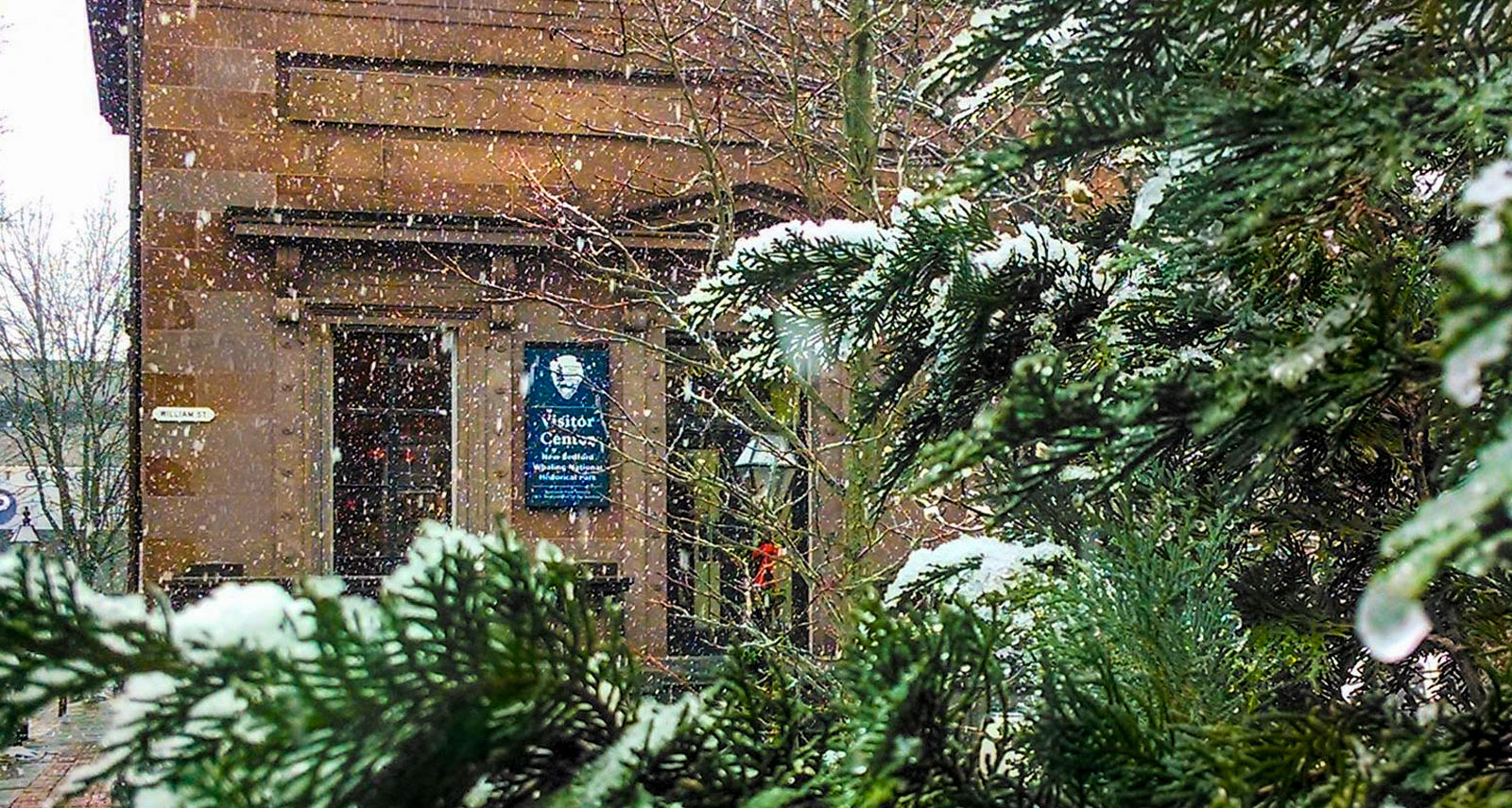
Snow falls on the New Bedford Whaling National Historical Park Visitor Center, framed by snowy evergreen branches. · NPS Photo · Official image source · No claim to original U.S. Government works.
New Bedford Whaling National Historical Park has announced winter hours of operation for the park’s visitor center. The visitor center, located at 33 William Street will be open to the public Wednesday - Saturday from 9:00 AM to 5:00 PM. This change in hours begins December 1, 2024 and remains in effect until March 31, 2025. The Visitor Center will be closed on Sundays, Mondays, and Tuesdays. In addition, the Visitor Center will be closed on the following holidays Thanksgiving, Christmas, and New Year’s Day.
New Bedford, MA – The Water We’re Swimming In, a sculpture created by artist Elaine Alder made of marine debris collected off the coast of Massachusetts, will be unveiled on Sept. 22 at 10:00 AM at Captain Paul Cuffe Park, located on the corner of Johnny Cake Hill and Union Street, part of the New Bedford Whaling Museum campus. The exhibit is a partnership between New Bedford Whaling National Historical Park, the National Oceanic and Atmospheric Administration (NOAA), and the New Bedford Whaling Museum to bring attention to marine debris issues in New Bedford.
New Bedford Whaling National Historical Park has announced that a daily screening of the award-winning documentary “Love Letters for New Bedford” will be shown at 3:30 PM Wednesday – Sunday in the park visitor center theater starting June 1, 2024. New Bedford filmmaker Ethan de Aguiar created this documentary to celebrate New Bedford’s artists and champion the city’s growing and vibrant creative economy. The almost 18-minute film contains interviews of 18 local artists, educators, poets, journalists, authors, vocalists, and others, who shared their love for New Bedford and its citizens. Once completed, the film was submitted to 33 film festivals, gaining 15 Official Selections and 4 Awards. The film received International Wins for Best Documentary from the Portugal International Film Festival, 2023 Texas Arthouse Festival, Block Island Film Festival, and Screaming Ostrich International Film Festival.
New Bedford Whaling National Historical Park has announced its programming commemorating Black History Month during February 2024. This year’s theme chosen by the Association for the Study of African American Life and History (ASALH®) is African Americans and the Arts. New Bedford is known for its rich culture and historical artistic significance, and we celebrate today’s artists of the African diaspora who come from every corner of the globe. Two of New Bedford’s own, Iva Brito and Eden Soares will be telling the stories of their art and inspiration. In addition, the 1850s Ladies will explore New Bedford and Boston anti-slavery societies and how crafts became a part of the abolitionist cause. Finally, the park will show the movie, 12 Years A Slave, directed by African Brit Steve McQueen and tells the story of Solomon Northup, who was kidnapped and sold into enslavement from freedom.
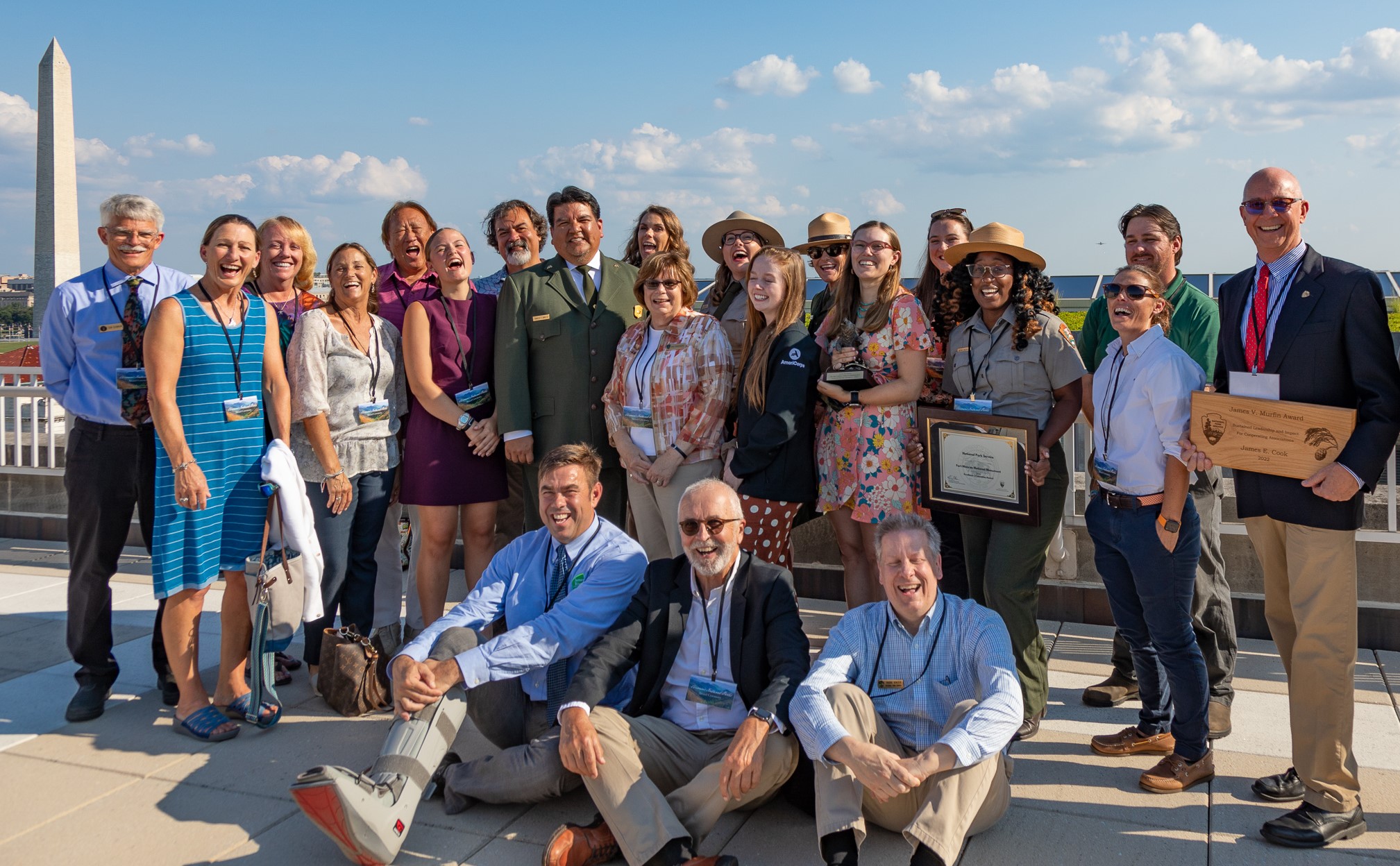
A large group of people stand together, some holding awards, with NPS Director. The Washington Monument is off to the side. · NPS/Kelsey Graczyk · Official image source · No claim to original U.S. Government works.
A variety of National Park Service (NPS) employees, volunteers and partners were honored at a ceremony to Celebrate America’s National Parks and the Dedication of Those Who Serve.