In August of 1900, several members of the Longfellow family travelled to Desbarats, Ontario, where they had been invited to attend the first performance of Henry Wadsworth Longfellow’s poem Hiawatha put on by members of the Garden River First Nation. These productions, which spread throughout Indigenous communities across Western Ontario and Northern Michigan in the years that followed, featured largely Native actors and were performed in the Anishinaabe language. Analyzing these Hiawatha performances offers a window to explore how Native people reappropriated Western representations to insist on the survival of their own peoples and traditions. This event will feature two talks about the August 1900 performance based on research done in the collections held by the Longfellow House-Washington’s Headquarters’ National Historic Site. The first, by Professor Karl Hele, will describe the context and circumstances of the performance. The second, by Professor Alan Corbiere, will look at the use of the Anishinaabe language in the performances and in the material created for the Longfellow family. Alan Corbiere , Bne wedoodemid (Ruffed Grouse clan), is an Anishinaabe from M'Chigeeng First Nation on Manitoulin Island. He is an assistant professor of history and Canada Research Chair in Indigenous History of North America at York University. His research focuses on Anishinaabe language, oral traditions, and material culture. He has published in the journals Museum Anthropology , the Algonquian Papers , and others, as well as in the edited collection Afterlives of Indigenous Archives: Essays in Honor of the Occom Circle . He has also served as the the Executive Director at the Ojibwe Cultural Foundation and the Anishinaabemowin Revitalization Program Coordinator at Lakeview School, both in M’Chigeeng First Nation. Karl S. Hele , a member of Garden River First Nation, is a full professor and current Director of Canadian and Indigenous Studies at Mount Allison University in Sackville, New Brunswick. A specialist in Indigenous Studies, he focuses on First Nations history, politics, and law. He is the author of numerous articles and editor of several edited collections, including Engaging Indigenous Communities: Resources, Rebellions, and Resurgence (Aboriginal Issues Press, 2021), This is Indian Land: The Robinson Treaties of 1850 (Aboriginal Issues Press, 2016), and The Nature of Empires and the Empires of Nature: Indigenous Peoples and the Great Lakes Environment (Wilfrid Laurier University Press, 2013). This program is made possible by the Mellon Humanities Fellowship Program and Friends of the Longfellow House-Washington's Headquarters, Inc.
Families are invited to drop in for a special trick-or-treat kickoff on the front lawn of the Longfellow House! Put on your costume and enjoy treats, crafts, and Halloween history. Free and open to all, recommended for ages 4-12.
Charles Appleton Longfellow (1844–1893), the eldest son of poet Henry Wadsworth Longfellow and Frances Appleton Longfellow, was a globetrotter and avid collector. During his 20-month stay in Japan (1871–1873), he purchased and shipped home to Cambridge dozens of crates of artworks and decorative objects for himself, friends, and family. Upon his return in 1874, Charley transformed the sitting room at his family home into a “ Japan Room ” with the help of his cousin Alexander Wadsworth Longfellow (1854–1934). One of its most striking features was a ceiling decorated with more than 35 fan-shaped paintings arranged in a “scattered fan” pattern. Although Japanese art and decorative objects had entered U.S. markets by the mid-1870s, their availability and visibility varied considerably by city. Created in 1874, on the eve of the transformative 1876 Centennial Exhibition in Philadelphia, the Japan Room represents an unusually early American domestic interior devoted to Japanese art and design. This lecture examines its remarkable ceiling of fan paintings, exploring their origins and arrangement and considering how this distinctive feature of the room reflects the ways Japanese art was displayed and experienced in nineteenth-century America. This research was supported by the Friends of the Longfellow House-Washington's Headquarters 2025 Art Research Fellowship Program. ————————————— Elizabeth K. Eder, Ph.D. , is a museum scholar, educator, and researcher who has worked at the Smithsonian Institution for more than 20 years, including at the Smithsonian American Art Museum, the National Museum of Asian Art (formerly the Freer Gallery of Art and Arthur M. Sackler Gallery), and the Anacostia Community Museum. Her museum career has also included positions at the Walters Art Museum, the National Gallery of Art, and the American Alliance of Museums. Her research interests include nineteenth-century American art; Chinese, Japanese, and European artistic influences on American art; the history of cultural exchange; and women’s histories. Her publications include books, scholarly articles, and museum print and digital resources. She is currently a Research Associate at the Smithsonian’s National Museum of American History and teaches in the Museum Studies Graduate Program at Johns Hopkins University, most recently History and Philosophy of Museums (in Global Context) . She is also Principal of Elizabeth K. Eder & Associates LLC, a museum consulting practice.
The spirit-world around this world of sense Floats like an atmosphere, and everywhere Wafts through these earthly mists and vapours dense A vital breath of more ethereal air. -From “Haunted Houses” by Henry Wadsworth Longfellow Scientific discovery – and the promise of glimpsing the world beyond our perception – captured the imaginations of 19th century Americans. Join Longfellow House-Washington’s Headquarters for a special evening of historic house tours exploring the intersections of Victorian scientific thought, the lure of the supernatural, and their echoes today. 50-minute tours will invite participants to examine the unknown as we consider the Longfellow family’s entanglements with forensics and phrenology, early views of outer space, the spiritualism movement, and their pioneering use of ether anesthesia. Please note: This tour will include sensitive but frank discussions of 19th century violence, medical procedures, and drug use. Please use discretion when registering.
Join us for this special book launch event with author Paul Lewis, on the 177th anniversary of the day Poe died in 1849. Copies of Quothing "The Raven": The First Responses to America's Most Famous Poem will be available for purchase and signing. What factors influenced the attention devoted to Poe's "Raven" from the very day when it was first published in 1845? Why was it widely reprinted, praised, criticized, and mocked during the following weeks and months? How has it sustained interest from that first publication through to the present? And how did Poe's "Little Longfellow War" and Bostonian parodies of "The Raven" figure in the rollicking rollout of America's most famous poem? Blurbs: " Paul Lewis's QUOTHING 'THE RAVEN' is a wonderful romp through the sea of parodies that proliferated in the wake of the publication of Edgar Allan Poe's 'The Raven' in 1845. Here we meet not the saintly, stately Raven of Poe's poem, but 'The Owl,' 'The Turkey,' 'The Gazelle,' and even 'The Bed Bug.' Gathering these parodies together for the first time, Lewis expertly guides readers through the chaotic world of Antebellum magazines and newspapers that Poe himself navigated. Lewis has written an absolutely delightful book full of both humor and wisdom about America's most famous poem." --Sandra Tomc, professor of English Language and Literature, University of British Columbia, Vancouver, and author of INDUSTRY AND THE CREATIVE MIND " QUOTHING 'THE RAVEN' is a significant contribution to Poe scholarship and a genuine pleasure to read. Poe said that he wrote his most famous poem 'for the express purpose of running,' and Paul Lewis shows us how it 'ran' through 1840s pop culture and reshaped Poe’s career and reputation. The parodies themselves are fascinating, and the context Lewis provides for them is invaluable. This book is essential to understanding how 'The Raven' became America's favorite poem." --Scott Peeples, author of THE MAN OF THE CROWD and THE AFTERLIFE OF EDGAR ALLAN POE Paul Lewis is a professor emeritus at Boston College, past president of the Poe Studies Association, the curator of exhibitions on literary Boston, and the neologist who coined the word “Frankenfood.” The author of books and articles on humor, American literature, gothic fiction, and literary Boston, Lewis edited The Citizen Poets of Boston: A Collection of Forgotten Poems, 1789-1820 , for the University Press of New England. His newest book, Quothing "The Raven": The First Responses to America's Most Famous Poem , will be released October 6, 2026 from Mercer University Press.
Entrance to the historic house is by guided tour only, and all tours are free of charge. General George Washington’s Cambridge headquarters was a testing ground for many of the ideals, institutions, and questions that still define our nation. This conversational tour explores Cambridge Headquarters as a hub of revolutionary activity, where generals, enslaved people, paid laborers, poets, Indigenous diplomats, politicians, and soldiers shaped history - and how later generations would shape its memory.
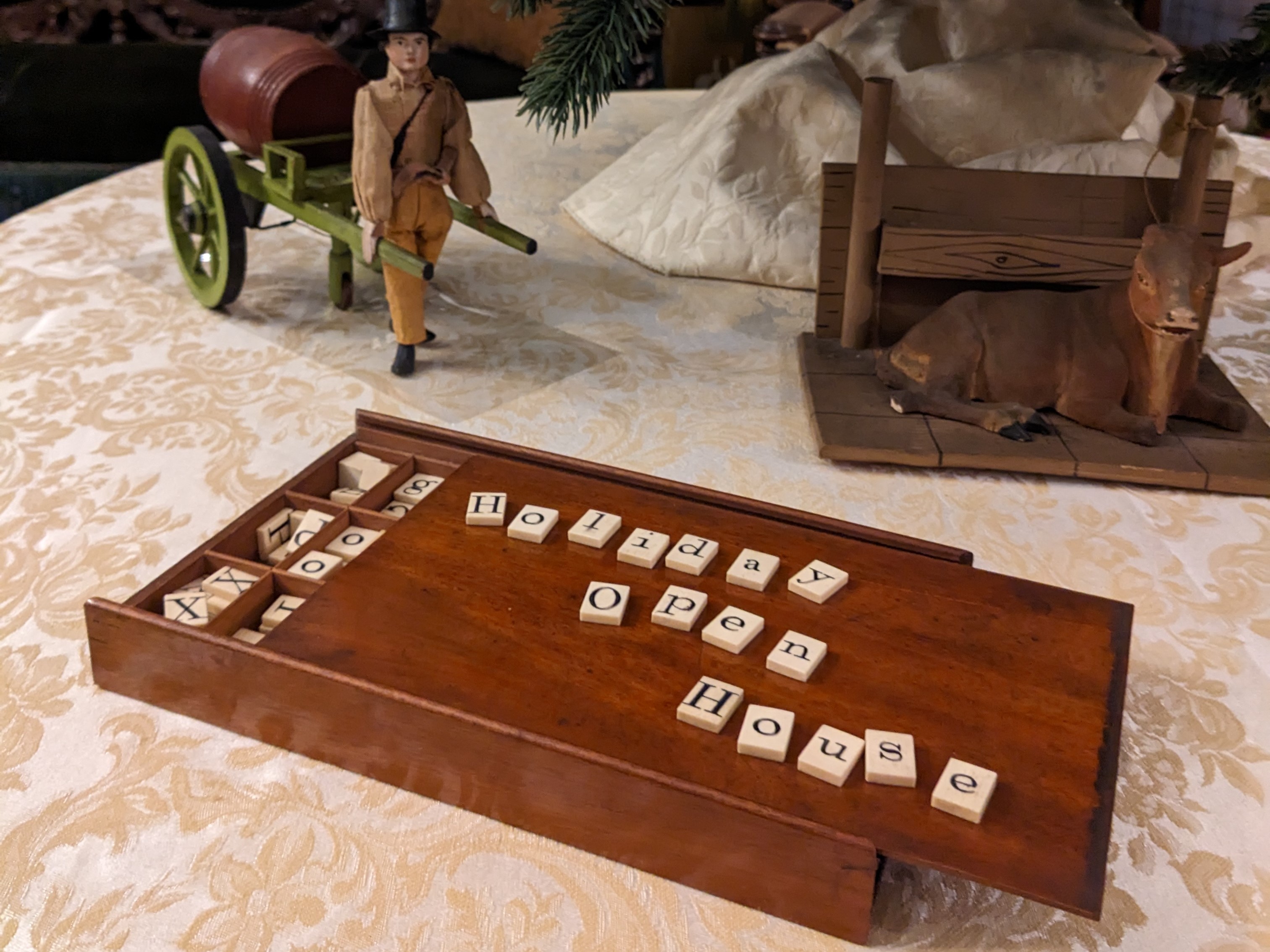
A 19th century letter tile game displaying the words "Holiday Open House" with antique toys behind it · NPS Photo · Official image source · No claim to original U.S. Government works.
Friday, December 12, from 1:00 to 8:00 PM, Longfellow House–Washington’s Headquarters National Historic Site, the Lincoln Institute of Land Policy, and the Friends of the Longfellow House–Washington’s Headquarters invite the community to a festive, free Holiday Open House.
To mark the 250th anniversaries of the American Revolution and the founding of the United States, a coalition of local non-profits and government agencies will present "Washington in American Memory." Through talks by preeminent historians and authors, the series will explore the evolution of the public memory of George Washington.
A new National Park Service report shows that 51,496 visitors to Longfellow House-Washington’s Headquarters National Historic Site in 2024 spent $3,624,000 in communities near the park. That spending supported the local area.
All summer long, visitors are invited to explore a special museum exhibit inside the Longfellow House, available after all house tours. “Washington's Headquarters and the Memory of the American Revolution” highlights the house’s pivotal role in the Revolution, from its time as George Washington’s headquarters during the Siege of Boston to the Longfellows’ roles in shaping the memory of America’s founding era.
Over the three weeks from Juneteenth National Independence Day to Independence Day, Civic Season invites visitors to Longfellow House–Washington's Headquarters National Historic Site to reflect on the meaning of freedom. The two public holidays that bookend Civic Season are deeply tied to the site's history, linking the struggles for independence and emancipation across generations.
The Longfellow Summer Arts Festival returns for another season of vibrant, community-centered programming with free poetry, music, and dance performances most Sunday afternoons at 3:00 PM on the east lawn of the historic Longfellow House–Washington’s Headquarters National Historic Site.
Cambridge, MA – The National Park Service is pleased to announce the 2025 seasonal opening of Longfellow House-Washington’s Headquarters National Historic Site, inviting visitors to explore its rich history and legacy. Beginning May 23 through October 27, 2025, the site will offer free, ranger-led house tours every Friday, Saturday, Sunday, and Monday.
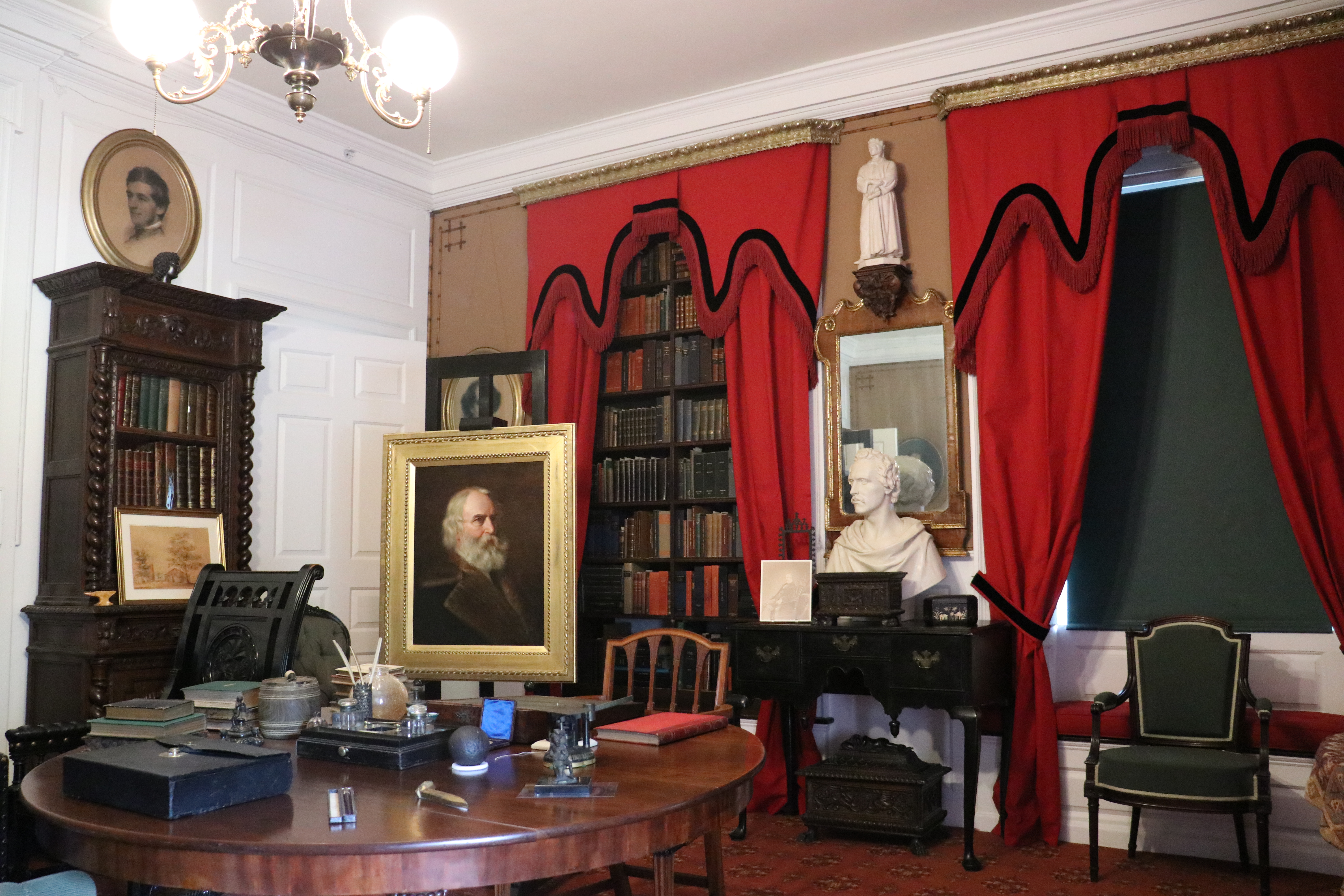
View of historic furnished room with round center table with books and inkwells, red curtains with black trim, and oil portrait of Henry Longfellow on easel. · NPS Photo · Official image source · No claim to original U.S. Government works.
With generous support from the Friends of Longfellow House-Washington’s Headquarters, Inc., the National Park Service proudly announces the completion of a suite of museum collection conservation projects in the Longfellow House study. This historic room is the heart of the Longfellow House; it served as General George Washington's meeting/dining room in the early days of the American Revolution and later as poet Henry Wadsworth Longfellow’s creative workspace, where he penned many of his best-known works.
A new National Park Service report shows that 67.4 thousand visitors to Longfellow House-Washington’s Headquarters National Historic Site in 2023 spent $4.5 million in communities near the park.
History Cambridge, the Somerville Museum, Longfellow House-Washington's Headquarters National Historic Site, the Friends of Longfellow House-Washington’s Headquarters, Boston 1775, and the Cambridge Public Library will present three free events marking the 250th anniversary of the 1774 Powder Alarm and the start of Massachusetts’ political independence from Britain.
Longfellow House-Washington's Headquarters National Historic Site is pleased to announce free summer activities for families and children, along with a captivating new museum exhibit that explores the Longfellow children’s lives.
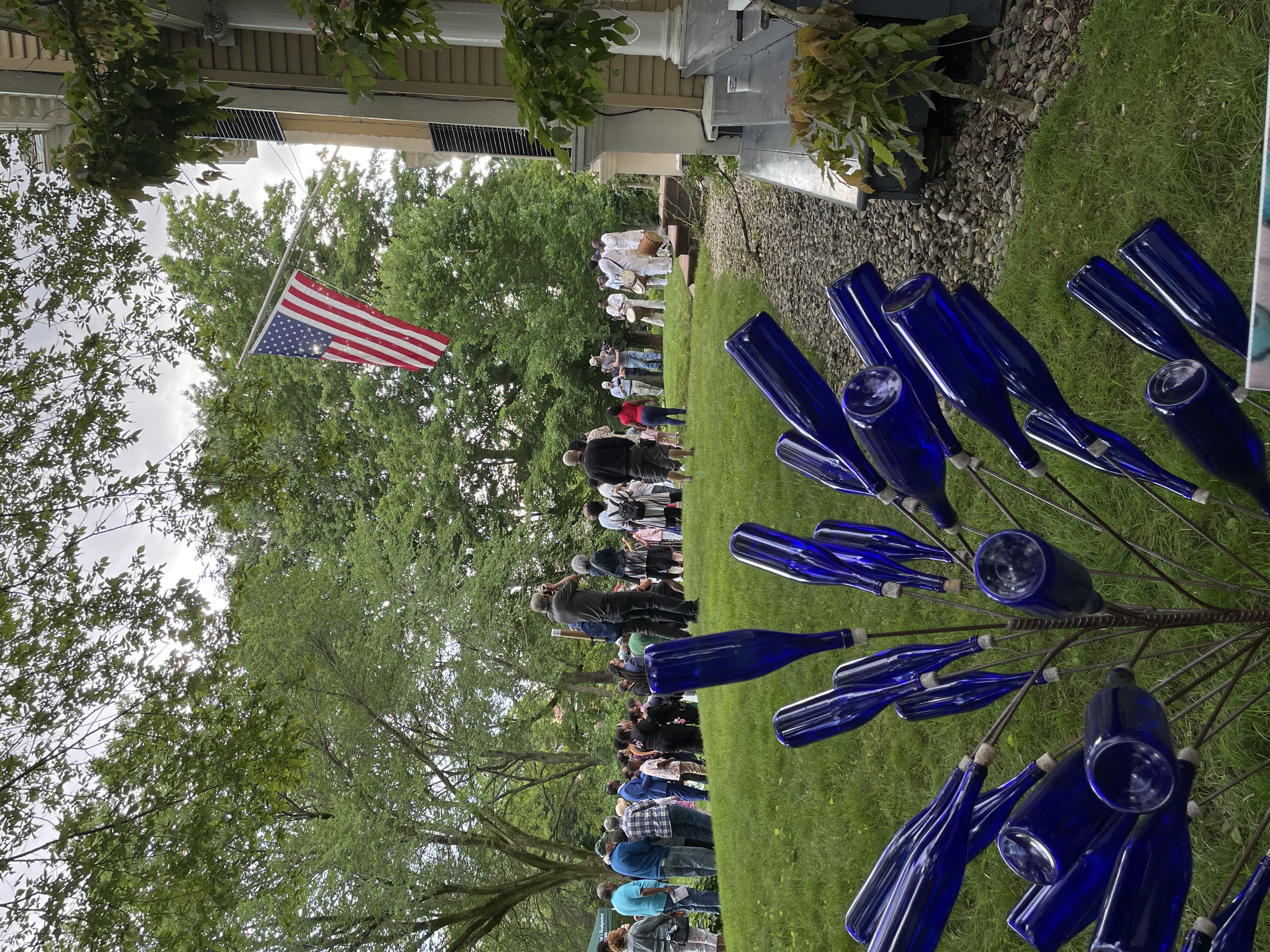
Crowd gathered listening to drummers with blue bottle tree in foreground · NPS Photo · Official image source · No claim to original U.S. Government works.
The third annual Juneteenth Gathering at Longfellow House-Washington's Headquarters National Historic Site in Cambridge, Massachusetts, will include poetry and music, and feature remarks from descendants of those who fought for their freedom on the eve of the American Revolution.
The National Park Service announces the 2024 public season at Longfellow House-Washington’s Headquarters National Historic Site, a free destination for groundbreaking history, contemporary poetry and music, and family activities.
The Paterson Fellowship from Friends of Friends of Longfellow House-Washington’s Headquarters supports researchers using the site's collections. The 2024 call for entries is open through April 15, 2024.
Smiling ranger points to artwork on the wall, while two visitors facing her look on · NPS photo/Sam DiMatteo · Official image source · No claim to original U.S. Government works.
Longfellow House-Washington’s Headquarters National Historic Site is among twenty National Park Service units that broke visitation records in 2023. Visitation to the Longfellow House increased to a record high of 67,376 visits in 2023, nearly 7,000 more visits than the site’s previous record set in 2022.
19th century game board showing "Holiday open house" in letter tiles with toys and tree in background · NPS/Talya Housman · Official image source · No claim to original U.S. Government works.
Longfellow House-Washington’s Headquarters National Historic Site and our neighbors invite the community to the free annual Holiday Open House. This year, guests of all ages are invited to celebrate children’s joy around the holidays and to embrace the playful spirit of the season amid the decked historic halls of the Longfellow House.
The National Park Service announces plans to replace the roofing and enhance the water-shedding systems on both the Longfellow house and Longfellow carriage house. Work is scheduled to begin in fall 2023 and extend into summer 2024.
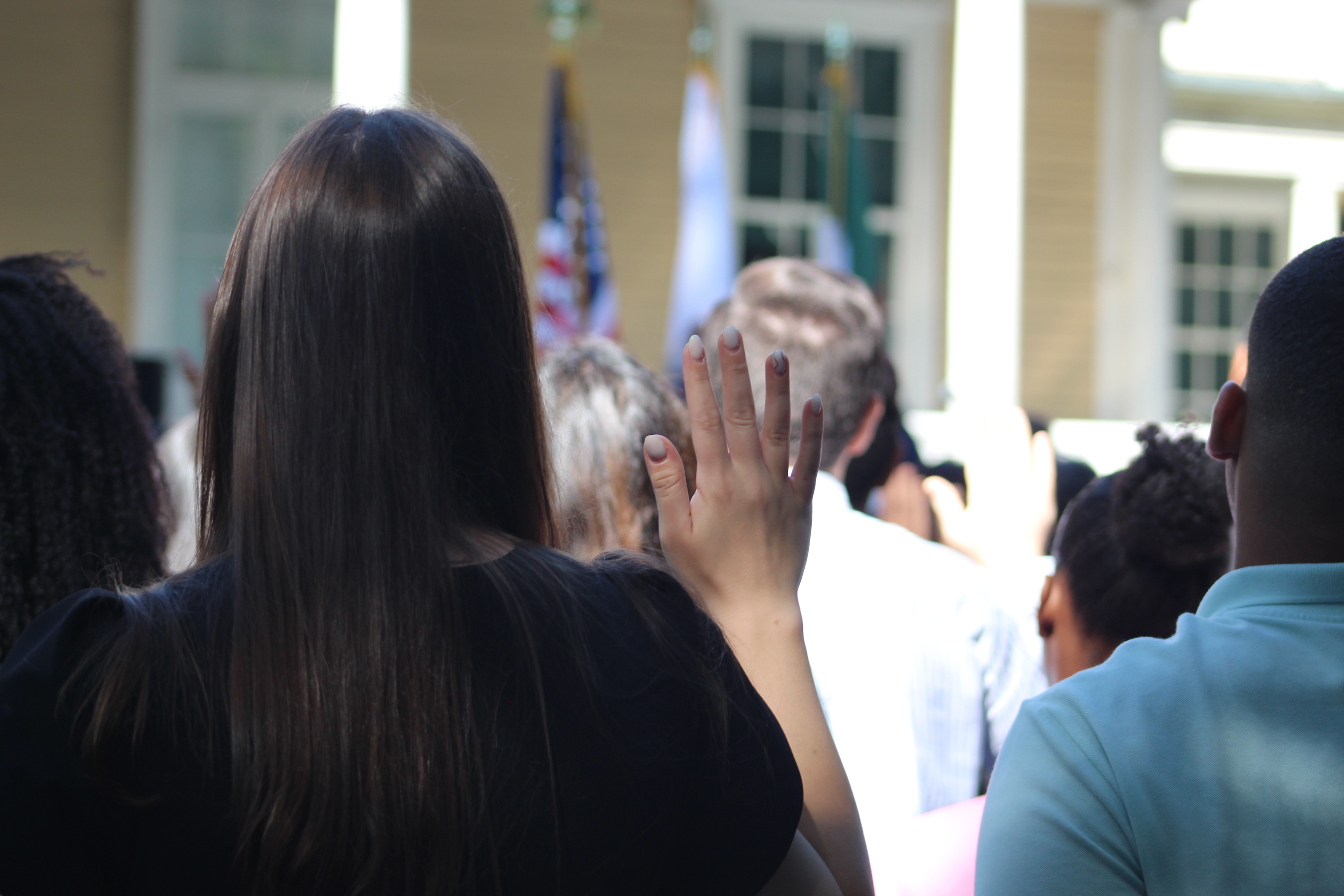
New citizens face away from the camera while raising their right hands. · NPS/Sam DiMatteo · Official image source · No claim to original U.S. Government works.
On the morning of October 5, seventy-four people from forty-two countries became the United States’ newest citizens on the east lawn of Longfellow House-Washington’s Headquarters National Historic Site.
Longfellow House-Washington’s Headquarters National Historic Site plans tree work throughout its two-acre grounds to support long-term tree health, reduce risk to historic structures, and enhance visitor safety. This work will also ensure that the historic character of the landscape is perpetuated into the future.
A new National Park Service (NPS) report shows that 60,600 visitors to Longfellow House-Washington’s Headquarters National Historic Site in 2022 spent $4 million in communities near the park. That spending supported 50 jobs in the local area and had a cumulative benefit to the local economy of $6.1 million.
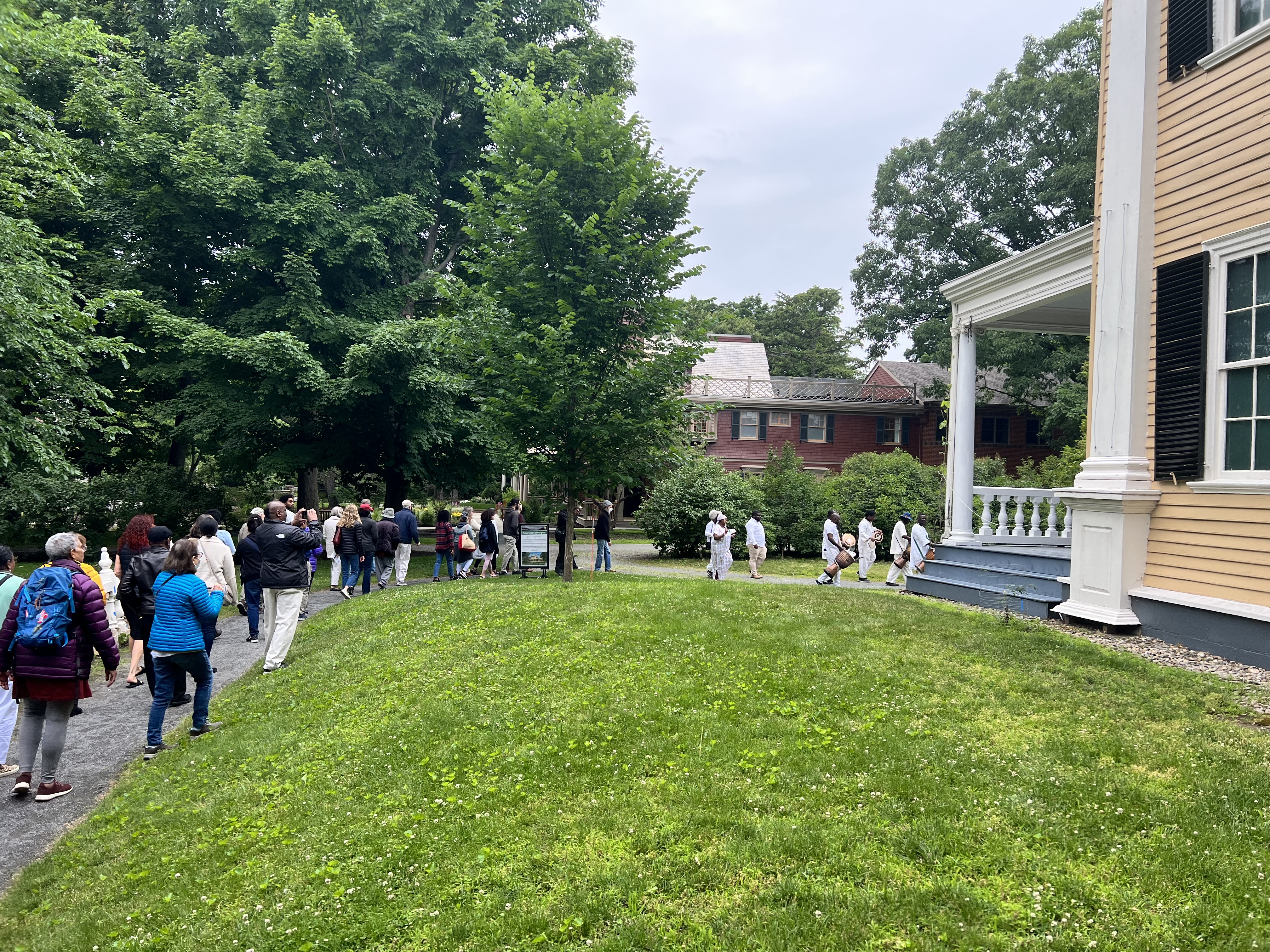
Drummers lead a procession of visitors around the Longfellow House · NPS Photo · Official image source · No claim to original U.S. Government works.
The National Park Service announces the 2023 public season at Longfellow House-Washington’s Headquarters National Historic Site, including the Summer Arts Festival, historic house tours, family programs, and a special museum exhibit.
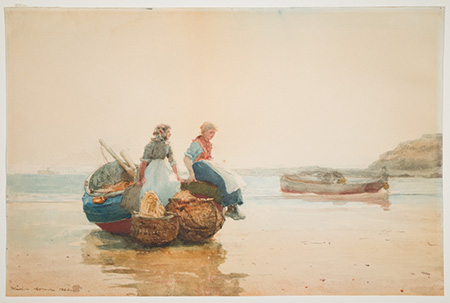
Watercolor painting of two women seated on a fishing boat on the shore. · NPS Photo / James P. Jones · Official image source · No claim to original U.S. Government works.
"Waiting for the Boats," an 1882 watercolor by Winslow Homer, joins the Longfellow House-Washington's Headquarters National Historic Site’s museum collection.