NASA’s mock Mars crew nears October 31 exit
By Staff Writer · Published 10/22/2026, 5:11:10 AM ET
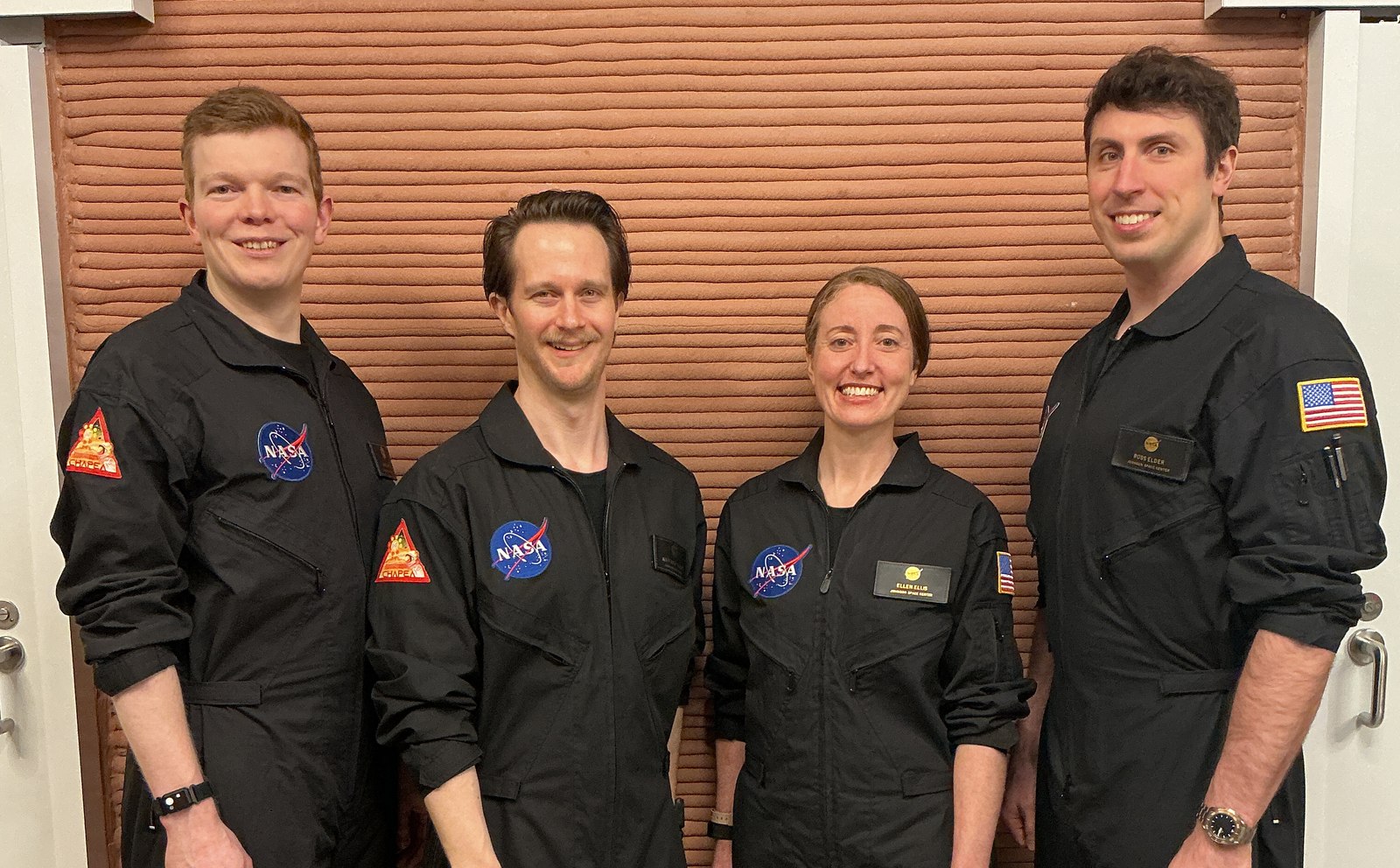
CHAPEA Mission 2 crew members after a year in the habitat. From left: James Spicer, Matthew Montgomery, Ellen Ellis and Ross Elder.
NASA · Official image source · NASA media guidelines permit factual editorial use with source credit; no endorsement implied.Four volunteers reached a year inside NASA’s Houston habitat on October 19. Their scheduled departure begins two weeks of evaluations on living and working under mission-like constraints.
Four volunteers in NASA’s ground-based Mars simulation reached a year of isolation on October 19 in Houston. NASA says they are scheduled to leave the habitat October 31, completing a mission designed to last 378 days.
The crew has lived at Johnson Space Center since October 19, 2025. Inside a 3D-printed residence measuring 1,700 square feet, members have grown crops, worked with limited resources and carried out tasks meant to resemble work during a Mars expedition.
Ross Elder commands the mission. Ellen Ellis serves as medical officer, Matthew Montgomery as science officer and James Spicer as flight engineer. The project is called CHAPEA, short for Crew Health and Performance Exploration Analog.
Its routines include equipment upkeep, exercise, robotic operations and simulated spacewalks. NASA’s program overview also lists equipment failures and communication delays among the conditions researchers are studying.
Crew members have stayed in touch with their families by email, subject to the simulation’s communication delay. They will be able to reunite with relatives after leaving the habitat, NASA said.
Health and performance measurements remain central to the experiment. NASA said its scientists were preparing to process the collected data ahead of the anniversary. After departure, the crew faces two weeks of evaluations and debriefings.
The agency wants to understand how food supplies, exercise systems and medical and psychological support affect a crew’s ability to carry out a long mission. It also intends to study decision-making when communications are delayed. The October 19 update described those research aims and the coming evaluations without reporting final health findings.
NASA has linked a public video stream for the October 31 exit ceremony from its release. The habitat itself contains separate sleeping quarters for four people, work areas, a medical station and spaces for meals and growing food.
What it means
Leaving the habitat starts another phase of the study. NASA plans to combine the crew’s observations with health and performance measurements to examine how sustained isolation, restricted resources and delayed communication affect everyday work. The post-mission evaluations are the next step toward using those observations in planning future expeditions.
Source
This State & Nation summary is based on NASA’s original release, dated 2026-10-19. The reporting and statistics above are attributed to that publication.