Webb image shows young stars reshaping NGC 7129
By Staff Writer · Published 10/23/2026, 9:07:22 AM ET
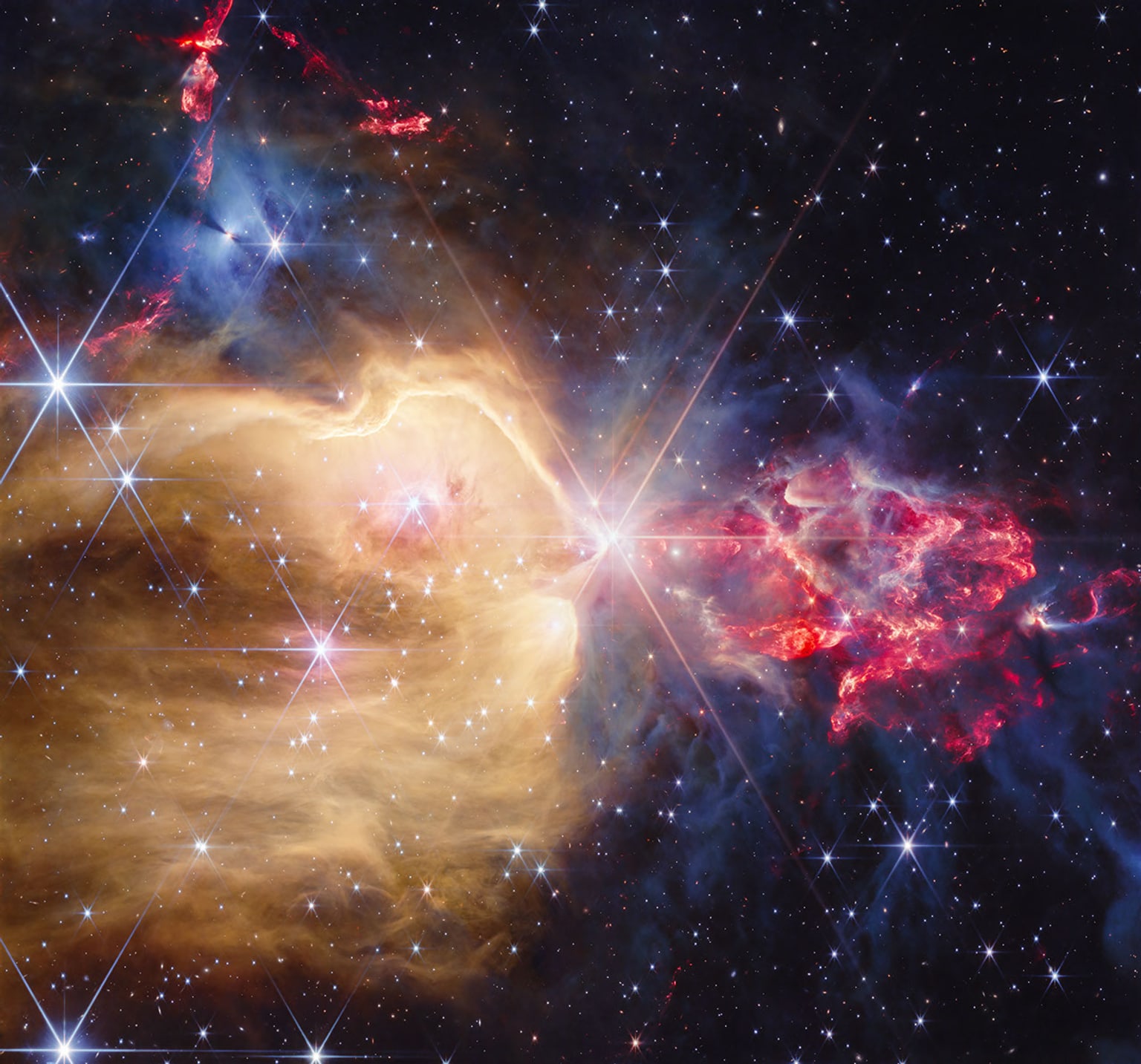
NGC 7129 in Webb's infrared view. Gold depicts hot atomic hydrogen, while red depicts cooler molecular hydrogen affected by shocks from embedded protostars.
NASA, ESA, CSA, STScI; Image Processing: Alyssa Pagan (STScI) · Official image source · Editorial informational reuse under NASA Images and Media Usage Guidelines; retain full image credit and do not imply endorsement. No separate copyright restriction is marked on this supplied image.The infrared view reveals stars at different stages of development and the gas their outflows disturb, about 3,300 light-years from Earth.
A James Webb Space Telescope image traces the effects of developing stars on NGC 7129, a cloud about 3,300 light-years from Earth. NASA released the image October 6 and highlighted it again October 20, showing stars previously obscured by dust.
Webb detects infrared light, allowing astronomers to examine objects within those dusty clouds. Its image brings together stars at several stages of development, including protostars still gathering material and more developed stars that have largely finished that process.
The prominent central star, LkH(alpha) 234, has roughly five to eight times the Sun's mass. NASA's accompanying explanation describes a cavity about 3.5 light-years across to its left. Material expelled earlier in the star's development helped carve that space; its radiation and outflows make the gas glow. Some surrounding hydrogen is pushed away, while some is compressed into conditions that can support further star formation.
The right-hand cloud contains an earlier stage of stellar development: protostars that are adding mass while sending heated material outward. That ejected matter strikes the dense gas around them, producing shocks. Viewed together, the different stars' outflows overlap rather than forming a single isolated stream.
The colors distinguish different gas conditions in the infrared view. NASA maps hot hydrogen atoms to gold and cooler hydrogen molecules affected by shocks to red. These representations identify gas being energized in different ways within the same region.
The image also provides a more detailed view of gas filaments than observations from NASA's retired Spitzer Space Telescope. NASA says astronomers will continue examining the Webb data to understand how these young stars affect nearby gas and dust.
What it means
NGC 7129 offers a view of several stages of star formation in one region: young objects gather material while their outflows and radiation alter the cloud that surrounds them. The Webb image released October 6, and highlighted again October 20, gives astronomers finer detail for studying those interactions. It shows conditions that can help new stars form, rather than establishing how many additional stars will develop.
Source
This State & Nation summary is based on NASA’s original release, dated 2026-10-20. The reporting above is attributed to the official sources linked here.