Perseverance reaches 45.22 kilometers, overtaking Opportunity on Mars
By Staff Writer · Published 10/23/2026, 12:17:58 AM ET
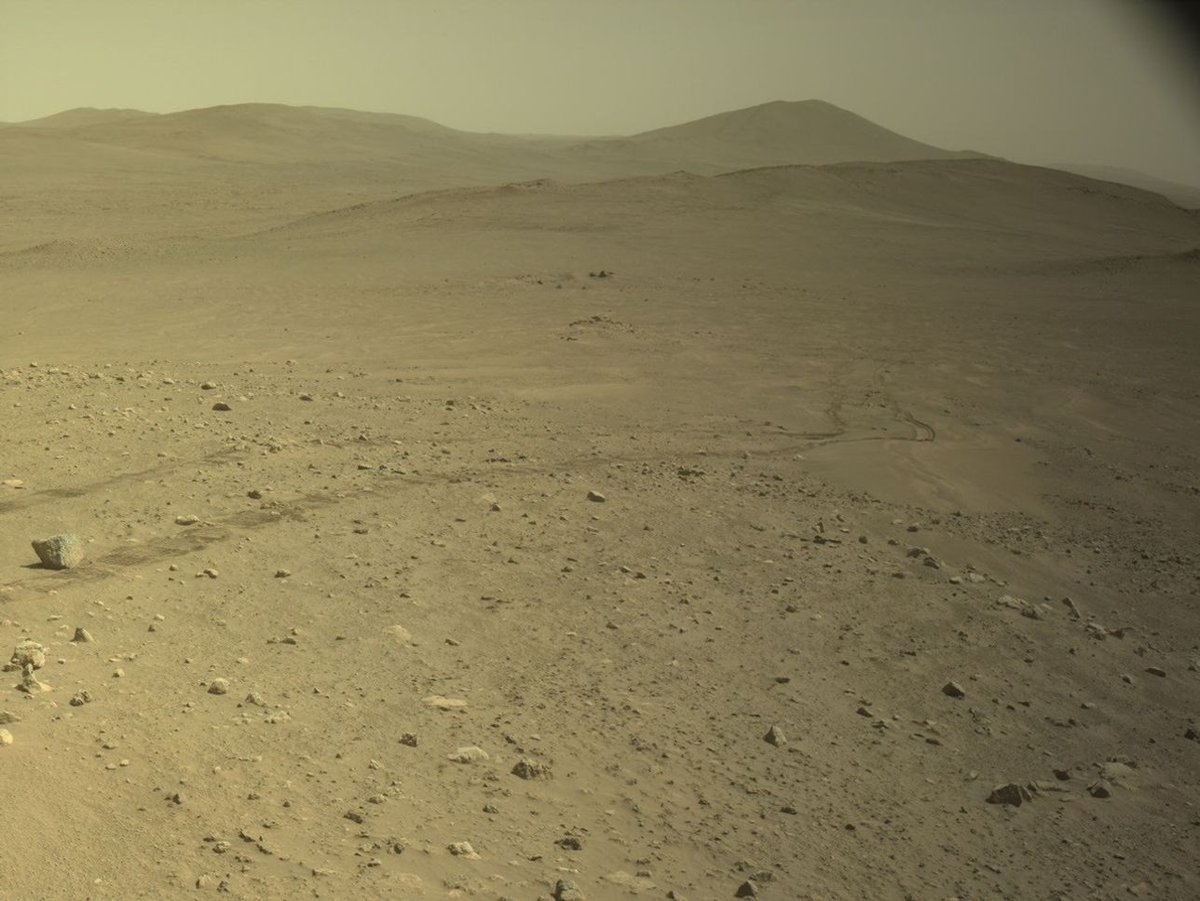
Perseverance’s left navigation camera photographed these tracks on October 11, 2026, the day its total driving distance passed the off-world record.
Courtesy NASA/JPL-Caltech · Official image source · NASA editorial image-use guidelines; credited NASA/JPL-Caltech, with no third-party copyright notice.NASA’s October 21 mission update explains the rover’s cumulative distance milestone and the software changes helping it cross difficult terrain.
NASA’s Perseverance rover set an off-world driving record on October 11 when its total distance on Mars reached 45.22 kilometers, or 28.10 miles. An October 21 mission update describes the navigation changes behind the achievement, which measures accumulated travel rather than the length of a single drive.
The rover passed the 45.16 kilometers logged by Opportunity, NASA’s previous record holder. According to the Jet Propulsion Laboratory’s October 12 account, Perseverance reached the mark on its 2,006th Martian day after about five and a half years; Opportunity explored Mars from 2004 to 2018.
The mission had been close to the milestone for some time. In the October 21 update, Vandi Verma, JPL’s chief engineer for robotic operations, describes the rover remaining about 200 meters short while the science team examined ancient rock outcrops.
Perseverance’s AutoNav system assesses the ground as the rover moves, builds a three-dimensional picture of obstacles and finds a route between destinations chosen by planners on Earth. JPL says the rover has used that system to evaluate terrain for more than 90% of its total travel.
The team has also adapted driving rules and software to difficult terrain. NASA’s mission update describes a 24-degree tilt limit and 20-centimeter clearance under the rover, adopted after simulations, alongside changes to braking and models of wheel slip.
Another capability compares images from the surface with orbital views to establish the rover’s location. It uses a processor in the Ingenuity helicopter’s base station; because that processor lacks radiation hardening, the team developed software to address radiation-induced memory errors, according to the update.
JPL says Perseverance’s first mission extension began in October and is intended to continue exploration around the crater rim through roughly the end of 2028. That is the planned exploration period, rather than a guarantee of future driving performance.
What it means
The driving record reflects access to more terrain for geological investigation, while the pause near the milestone shows that scientific work can take priority over mileage. Navigation software helps the rover cover ground, but Earth-based planners still choose its destinations. JPL’s planned extension gives the team an exploration window through roughly the end of 2028.
Source
This State & Nation summary is based on NASA’s original release, dated 2026-10-21. The reporting above is attributed to the official sources linked here.