NASA assigns key power work for 2028 nuclear Mars mission
By Staff Writer · Published 10/20/2026, 9:08:34 PM ET
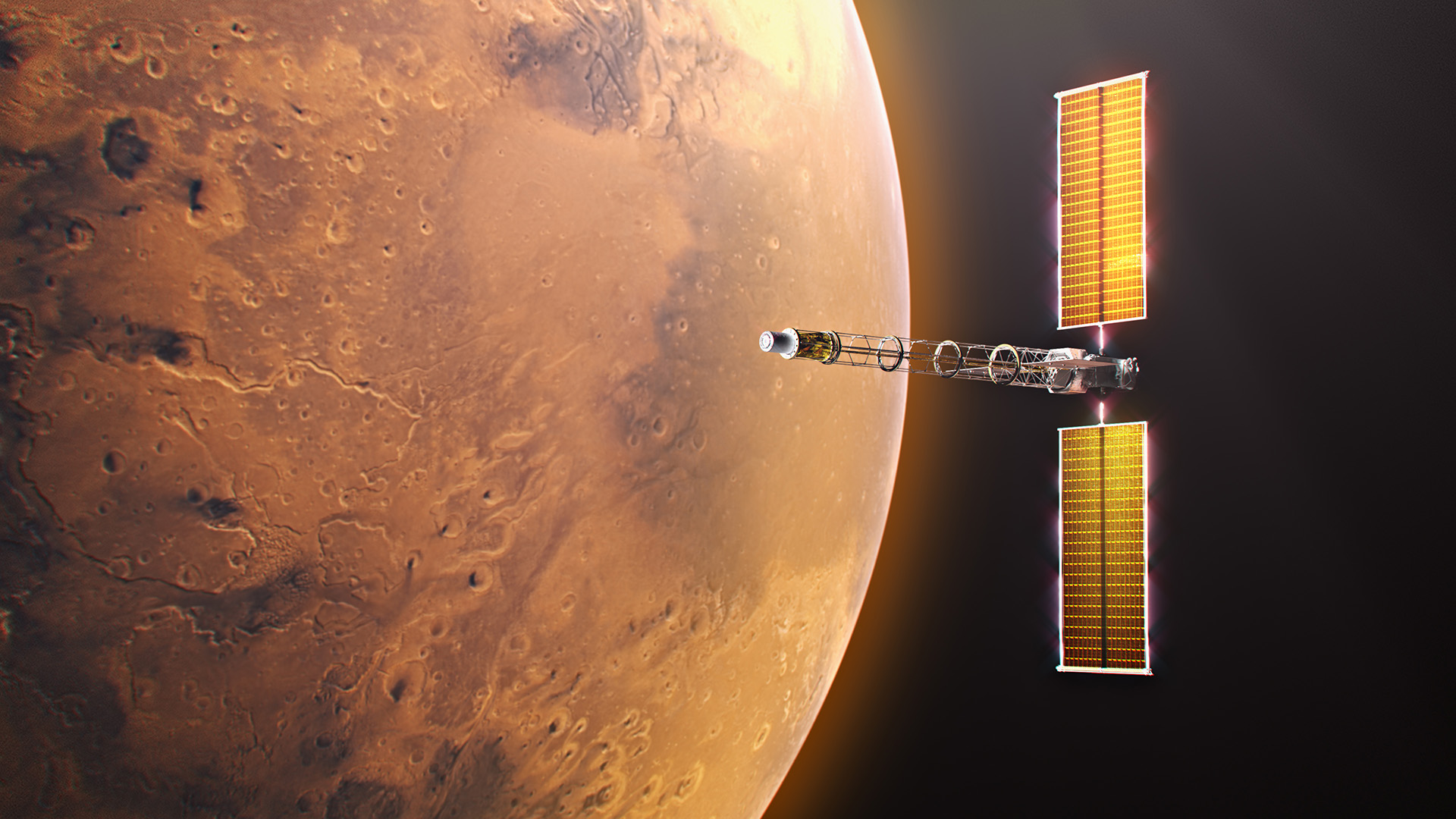
NASA illustration of Space Reactor-1 Freedom near Mars, with the spacecraft’s reactor and power-conversion module at the end of its boom.
NASA/Alberto Bertolin · Official image source · NASA media usage guidelinesSierra Lobo will build the system that converts reactor heat into electricity for SR-1 Freedom, while Idaho National Laboratory designs the reactor.
NASA said October 20 that it and its partners agreed to contract actions advancing the nuclear power module for Space Reactor-1 Freedom, an experimental spacecraft the agency is targeting for launch in late 2028. The mission is intended to demonstrate nuclear electric propulsion beyond Earth orbit and carry a science payload to Mars.
Sierra Lobo Inc. will supply a closed Brayton-cycle power-conversion system under NASA’s Space Flight Systems Development and Operations Contract III, which the agency awarded in 2024. Work will be performed at Glenn Research Center in Cleveland. The system is designed to turn heat from nuclear fission into electricity for spacecraft systems and electric propulsion.
The Department of Energy’s Idaho National Laboratory is designing and developing the reactor that will be integrated with Sierra Lobo’s conversion equipment. NASA describes the combined equipment as the nuclear power module, positioned at the end of the spacecraft’s boom.
NASA says the design process includes interagency safety reviews, regulatory compliance, a chief safety officer and safeguards addressing hazards and failure tolerance. The reactor is planned to remain inactive until the spacecraft has left Earth orbit.
SR-1 Freedom is planned to deliver SkyFall, three Mars helicopters derived from the Ingenuity design. NASA says the helicopters would gather scientific data, assess exploration zones and look for possible water sources. The agency’s mission page lists a 2028 launch and 2029 target arrival, but the new release does not disclose the value of the latest contract actions or a detailed development schedule.
What it means
The announcement assigns two central pieces of the power module to identified organizations: Sierra Lobo for heat-to-electricity conversion and Idaho National Laboratory for the reactor. It is a development step, not evidence that the integrated module has been built, tested or cleared for launch.
The late-2028 launch target depends on integration, testing, safety review and other work that NASA has not itemized in this release. The next concrete evidence of progress will be completion and testing milestones for the power module and the wider spacecraft.
Source
This State & Nation summary is based on NASA’s original release, dated 2026-10-20. The reporting above is attributed to the official sources linked here.