Twelve university teams win NASA backing for exploration research
By Staff Writer · Published 11/6/2026, 8:52:40 AM ET
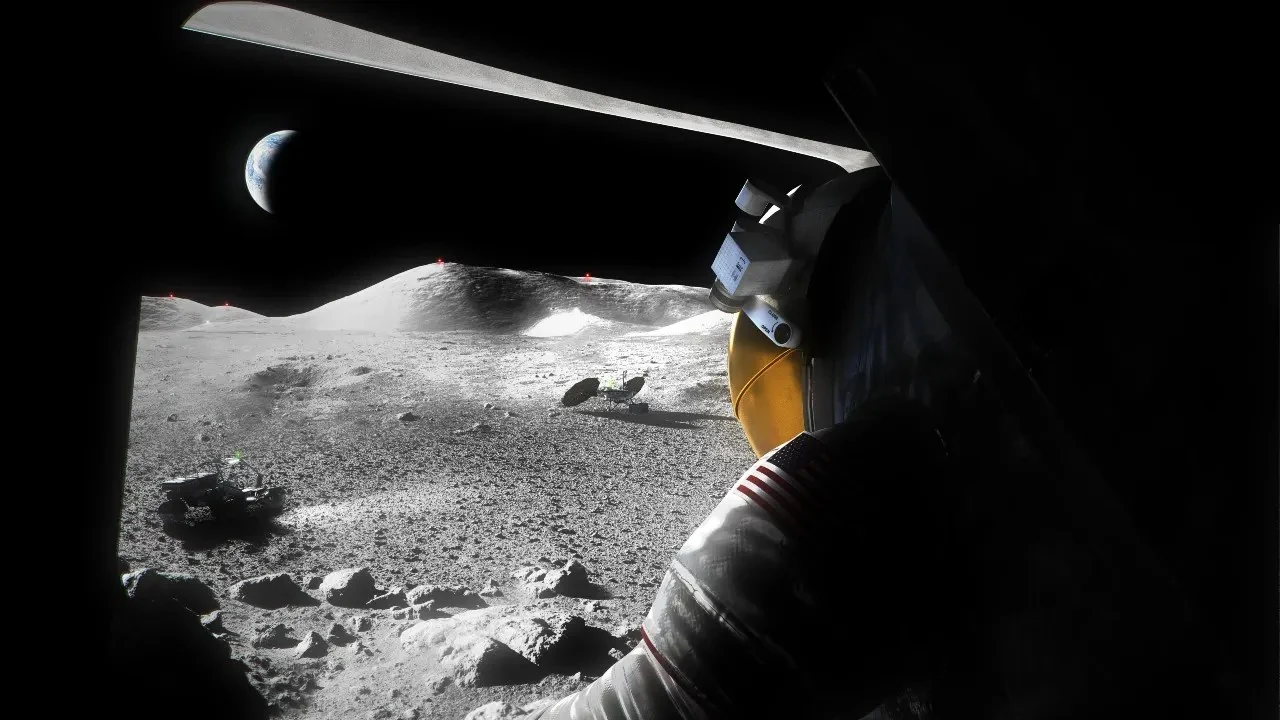
NASA illustration of a possible Artemis lunar-surface scene, supplied with the agency’s October 15 M-STAR announcement. This is not a photograph of a completed mission.
NASA · Official image source · NASA media-use guidelines permit factual editorial use with source acknowledgement; no endorsement implied.The October 15 selections support university technology projects and research capacity tied to exploration of the Moon, Mars and deep space.
Twelve U.S. institutions will share NASA research support totaling $12 million under selections announced October 15. The agency set a ceiling of $1 million for each institution in the MUREP Space Technology Artemis Research program, or M-STAR.
The awards are intended to expand the institutions’ research capabilities and involve faculty and students in aerospace work. NASA also wants the teams to become more competitive for subsequent government and commercial research awards. Those are program objectives, not a guarantee of later funding.
NASA chose California State University, Sacramento; Fayetteville State University; Howard University; Kean University; Prairie View A&M University; Shaw University; the University of Central Florida; the University of Hawaii at Manoa; the University of Houston; the University of New Mexico; the University of Texas, San Antonio; and Virginia Commonwealth University.
Their projects address several different exploration problems. Sacramento’s work concerns collaboration among multiple robots in difficult planetary environments. Central Florida’s project covers aerothermal simulation and testing, while Hawaii’s involves training in radiation instrumentation and detection. Houston’s proposal centers on rover-carried equipment deployed on a planetary surface, and the San Antonio team will investigate how surface materials behave in extreme cold.
Other projects cover autonomous path planning, propulsion-related materials and repairs, environmental systems, a rover spectrometer, power systems for extreme environments and model-based systems engineering. NASA’s announcement names the selected projects but does not give their individual completion dates.
What it means
The selections link research for NASA missions with development of faculty, student and institutional capabilities. NASA’s program description says M-STAR aims to strengthen undergraduate and graduate STEM research at minority-serving institutions and help them compete for research opportunities. The October announcement identifies award recipients and proposed work; it does not report finished technologies or announce an application round for individual students.
Source
This State & Nation summary is based on NASA’s original release, dated 2026-10-15. The reporting and statistics above are attributed to that publication.