NASA standardizes launch shock and vibration modeling
By Staff Writer · Published 10/22/2026, 6:39:16 AM ET
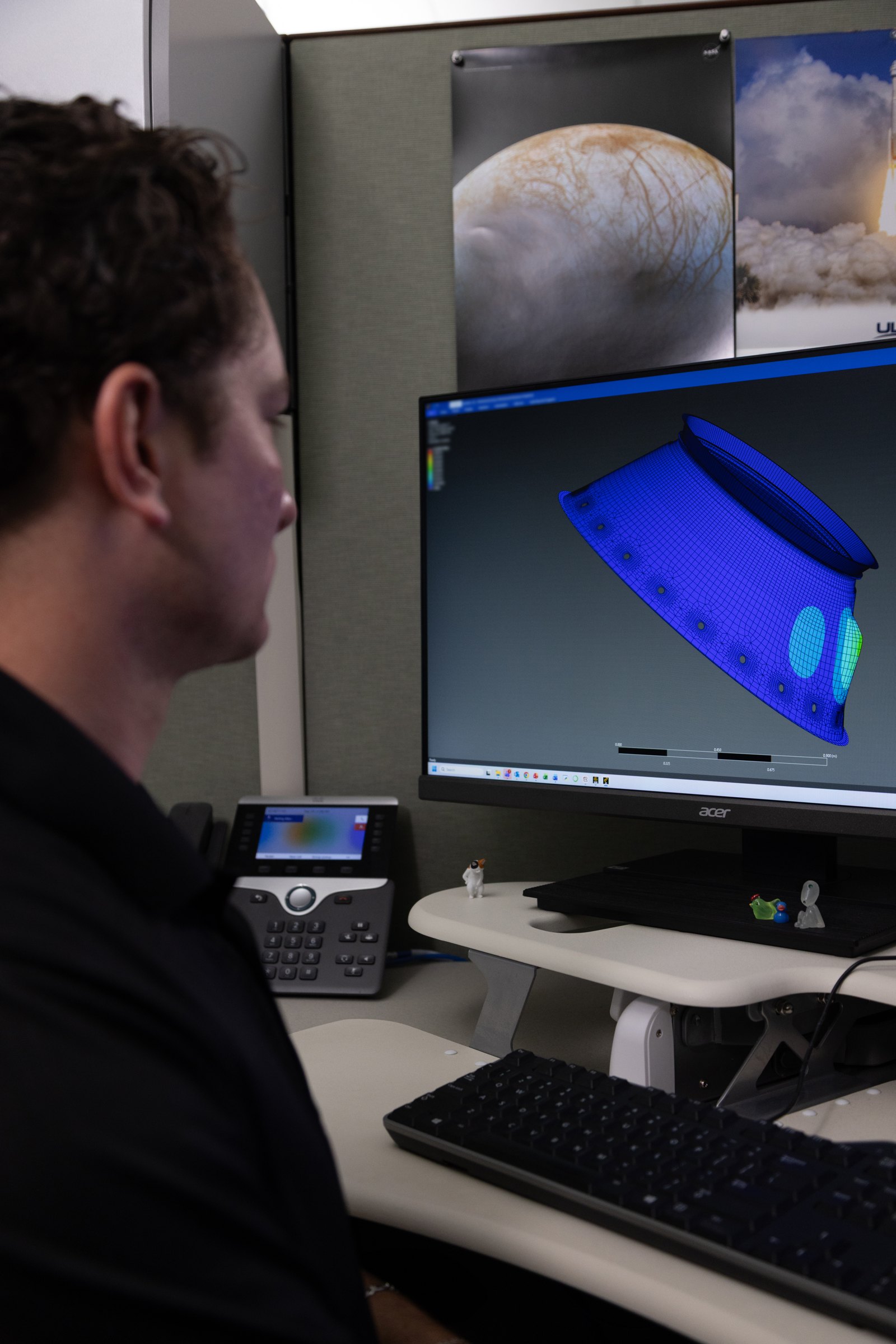
Stirling Allen of NASA’s Launch Services Program views a structural model at Kennedy Space Center in Florida.
NASA/Clayton Rougelot · Official image source · NASA editorial-use guidelines; agency image credited as supplied, with no endorsement implied.Kennedy engineers used a common modeling template to assess a commercial rocket, including questions about shock testing and transport. NASA says the approach has saved months of analysis.
NASA engineers at Kennedy Space Center have established a common computer-modeling workflow to evaluate the forces that rockets and spacecraft must endure. The agency described the method October 19 after its first use in certifying a commercial rocket selected for a NASA mission.
The work comes from the Dynamic Environments Group in NASA’s Launch Services Program Office in Florida. Engineers adapted existing commercial software to examine how a vehicle’s structure responds to sudden shocks and continuing vibration.
The commercial provider had supplied vibration-test results, but no shock testing, NASA reported. The group concluded that shock testing was necessary and used its modeling template to compare possible conditions and display structural responses. NASA said the analysis verified the provider’s test results for flight conditions and also yielded information about shocks during transport.
NASA did not identify the company, rocket or mission in the account. The release also did not name the software or say that the missing shock test had subsequently been performed.
The technique, finite element analysis, represents a structure as many smaller pieces so a computer can estimate their response to forces. A reusable template lets engineers carry out that work without repeatedly rebuilding an analysis process they may use only occasionally.
Previously, engineers estimated these conditions partly through experience and comparisons with earlier missions. Alex Hardt, an aerospace engineer in the program, said the new workflow lets the team investigate a provider’s system more quickly. NASA reported savings of months because engineers could perform analyses themselves rather than wait for requested reports or data.
What it means
The change gives NASA’s certification engineers another way to examine gaps in test evidence before launch and to study transportation as well as flight conditions. The reported time savings come from NASA’s own account; the release provides no independent performance comparison and announces no particular launch approval or flight result.
Source
This State & Nation summary is based on NASA’s original release, dated 2026-10-19. The reporting and statistics above are attributed to that publication.