NASA ends Swift mission after nearly 22 years
By Staff Writer · Published 10/24/2026, 1:08:48 AM ET
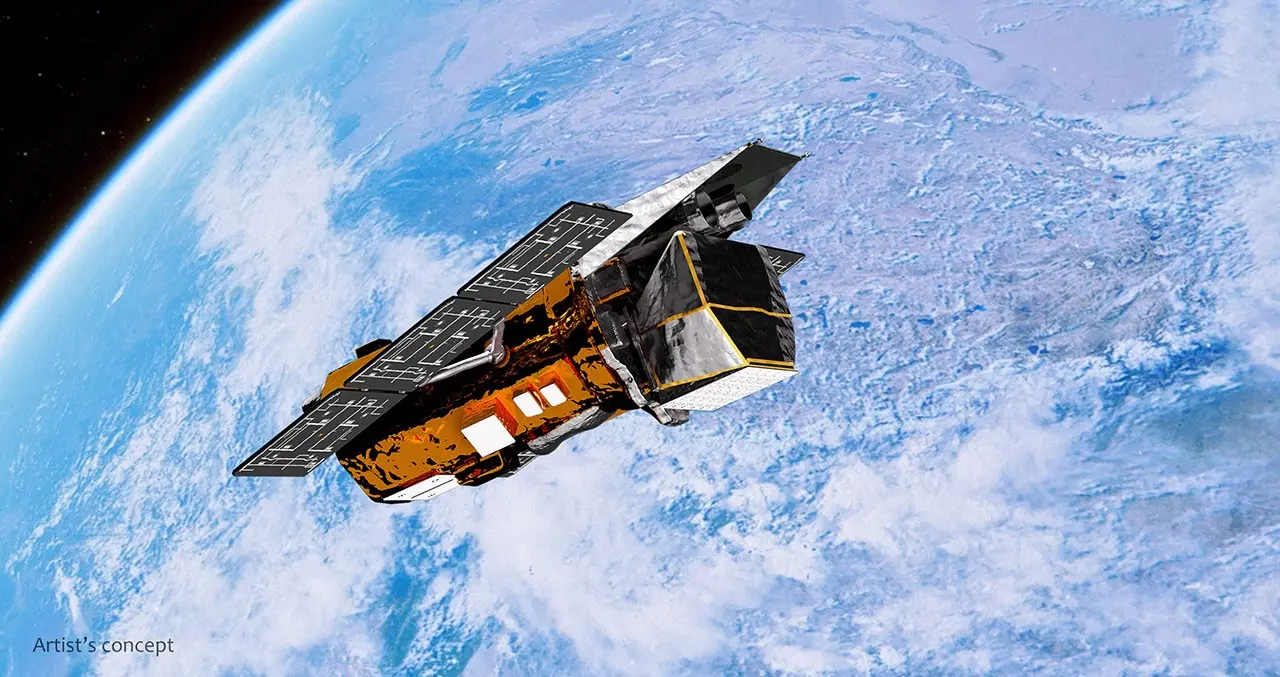
An artist’s concept shows NASA’s Neil Gehrels Swift Observatory above Earth during its mission.
NASA’s Goddard Space Flight Center Conceptual Image Lab · Official image source · NASA Images and Media Usage GuidelinesThe observatory made its final science observation October 20 as its low orbit prevented steady telescope pointing; re-entry is expected within weeks.
NASA has ended the science mission of its Neil Gehrels Swift Observatory after nearly 22 years in orbit. The spacecraft made its final observation October 20 because its orbit had fallen below 171 miles, where increasing atmospheric drag kept its three telescopes from holding steady on astronomical targets.
Swift launched November 20, 2004, for a planned two-year primary mission and began work the following month. It was designed to detect gamma-ray bursts, rapidly send their positions to other observatories and turn its optical, ultraviolet and X-ray telescopes toward the fading afterglows, typically within about a minute.
NASA says Swift observed more than 2,000 gamma-ray bursts and more than 1,400 supernovae, while also studying stars disrupted by black holes, active galaxies, asteroids and comets. Its data contributed to about 7,000 scientific papers.
The mission leaves a public archive of roughly 12 terabytes, including nearly 22 years of brightness measurements and more than 1.5 million images from the Ultraviolet/Optical Telescope. Scientists can continue using those records even though the spacecraft is no longer collecting new observations.
Swift is expected to re-enter Earth’s atmosphere within the next few weeks. NASA says it is assessing how existing observatories, commercial capabilities and potential new missions could preserve rapid follow-up of short-lived cosmic events, but the October 23 announcement does not identify a direct replacement or a date when comparable coverage will be available.
What it means
NASA ended Swift’s science operations after the observatory’s falling orbit made stable telescope pointing impractical. The spacecraft completed its final observation October 20 and is expected to re-enter within weeks. Its data archive remains public, but astronomers lose a dedicated rapid-response observatory while NASA evaluates how existing spacecraft and future missions could cover that role.
Source
This State & Nation summary is based on NASA’s original release, dated 2026-10-23. The reporting and statistics above are attributed to that publication.