Watkins prepares cell samples for space-station cartilage study
By Staff Writer · Published 10/21/2026, 1:11:11 PM ET
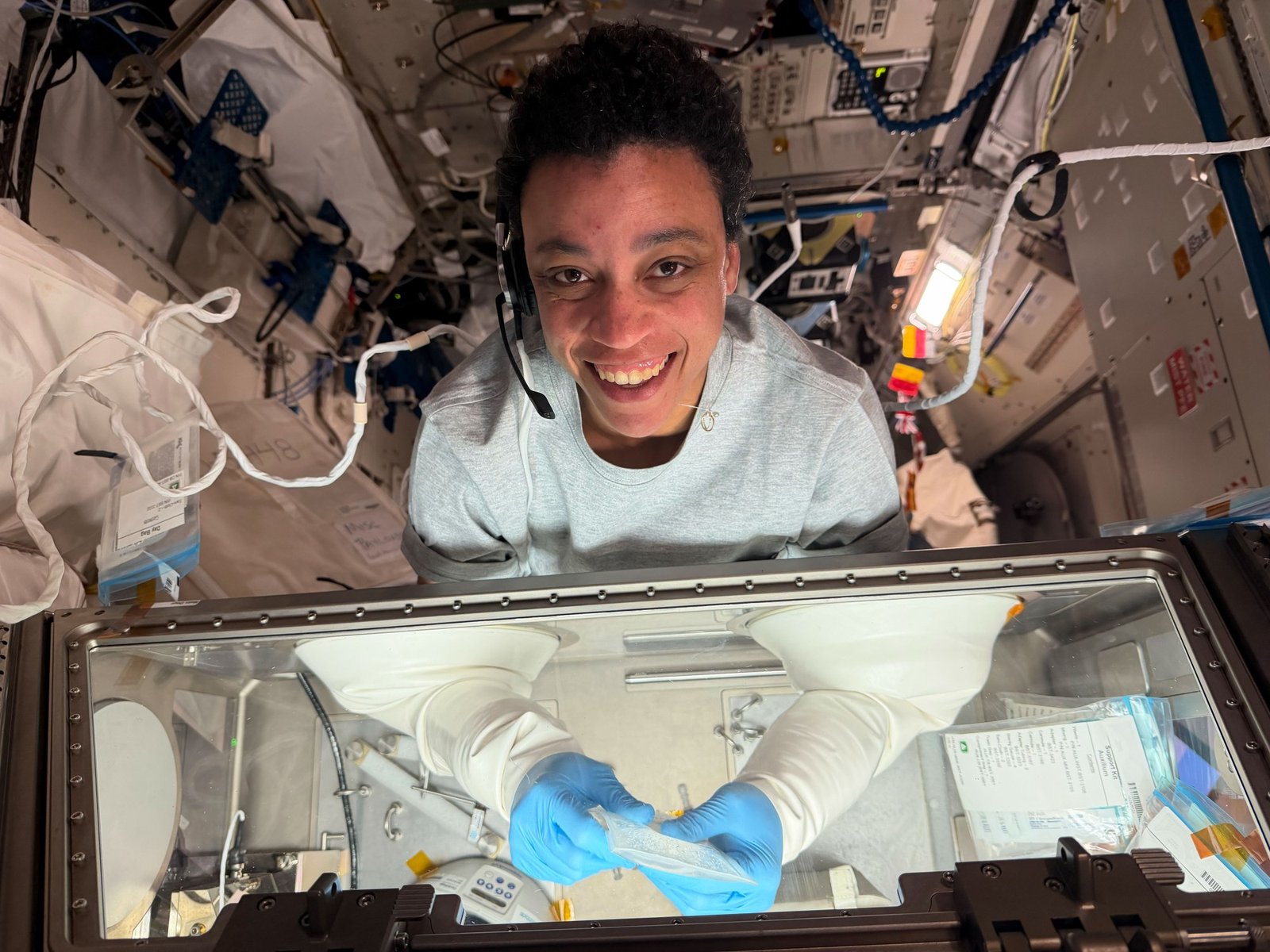
Jessica Watkins working at Kibo’s Life Science Glovebox, photographed October 9, 2026.
NASA/Anil Menon · Official image source · NASA editorial-use guidelinesA newly released NASA photograph documents October 9 work on an investigation into printing cartilage tissue in microgravity.
NASA astronaut Jessica Watkins mixed living cells with bioink aboard the International Space Station on October 9 for a cartilage-printing investigation, according to a photograph and description NASA released October 21.
Watkins, an Expedition 75 flight engineer, worked at the Kibo laboratory’s Life Science Glovebox and loaded the mixture into a cartridge. NASA identifies the experiment as InSPA-Auxilium Bioprinter-Cell Printing.
What it means
The investigation explores whether microgravity can improve the quality of bioprinted cartilage compared with production on Earth. NASA describes potential benefits for patients and future space crews; this image release supplies no clinical results or announcement of an approved treatment.
Source
This State & Nation summary is based on NASA’s original release, dated 2026-10-21. The reporting and statistics above are attributed to that publication.