Hoover’s 2006 burn proposal shows the work behind a reconstructed prairie
By Staff Writer · Published 11/10/2026, 4:01:03 AM ET
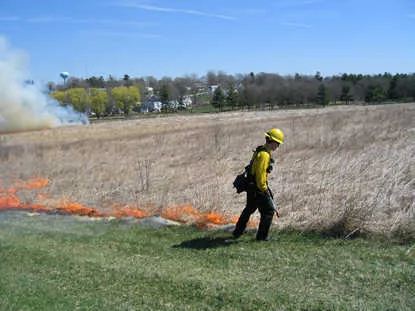
An NPS photograph accompanying the 2006 proposal shows a firefighter igniting prairie in April 2005. It does not document completion of the proposed October 2006 burn.
NPS Photo · Official image source · Public-domain NPS photograph; no claim to original U.S. Government worksSource-based Travel reporting · National Park Service, Herbert Hoover National Historic Site: original release (2006-10-10)
Archive: NPS proposed burning 36 acres in West Branch, Iowa. Later monitoring explains why managing the prairie requires more than preserving a view.
Herbert Hoover National Historic Site proposed a prescribed burn covering 36 acres of its tallgrass prairie in October 2006, according to an archived National Park Service announcement. The release set out a weather-dependent operation, not a confirmed burn date or a report that the work had been completed.
The October 10 notice identified two possible windows: the weeks beginning October 16 and October 23. It described the prairie as 81 acres at that time and said safety and weather would govern the final timing. NPS reported that the previous burn, in spring 2005, had treated nearly half the prairie with help from the U.S. Fish and Wildlife Service.
A written plan would define the intended results, available fuel, treatment area and conditions needed for the operation. Smoke management was part of that planning. The 2006 notice offered advance notification to nearby residents with specified lung conditions who lived within a mile of the site. That invitation belonged to the proposed 2006 operation; it is not a current notification program or medical recommendation.
About the location: The park is in West Branch, Iowa, near Interstate 80’s exit 254. Hoover’s birthplace, boyhood-era buildings and gravesite share the landscape with the presidential library, which the National Archives operates separately. The prairie adds a different kind of history: an attempt to reconstruct a plant community, rather than simply leave an untouched tract alone.
NPS’s Heartland monitoring account dates Hoover’s prairie reconstruction to 1971 and its plant monitoring to 2004. The agency tracks plant diversity, vegetation cover and young trees to help evaluate management. Its February 2024 account identifies encroaching woody plants as a concern and says the park had not burned since 2011 because of administrative challenges. That is the agency’s account as of 2024, not a verified description of burn activity through today.
What Travelers Need to Know: This archive report does not announce a present fire, trail closure or public demonstration. The 2006 release does not establish whether its proposed burn occurred. For a visit now, use the linked NPS conditions and planning pages and follow current on-site restrictions rather than the old October work windows.
Visiting the NPS historic site costs nothing; its fee page says no entrance pass is necessary. Museum arrangements are separate: the presidential library’s website returned an error during this review, so current museum hours, ticket terms and operating status are not confirmed here. Check with the museum before building an indoor visit into the trip.
What it means
The proposal illustrates the continuing management behind a reconstructed prairie at a presidential historic site. The later monitoring account supplies context for that work, but does not prove the outcome of the 2006 proposal. For visitors, the useful distinction is between learning about a past management plan and having current permission to enter a trail or attend an operation.
Source
This State & Nation summary is based on National Park Service, Herbert Hoover National Historic Site’s original release, dated 2006-10-10. The reporting above is attributed to the official sources linked here.