Euro-area firms report tighter loans; ECB flags survey limits
By Staff Writer · Published 10/26/2026, 11:11:44 AM ET
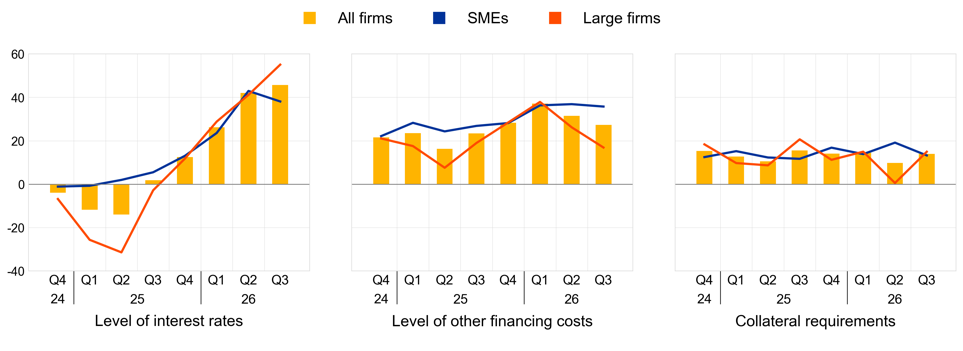
Changes in the terms and conditions of bank financing for euro area firms (net percentages of respondents). ECB Chart 1; respondents had applied for bank financing. Net figures subtract reported decreases from increases.
European Central Bank · Official image source · ECB reuse terms—source acknowledgement requiredThe ECB’s latest business survey points to more expensive borrowing and reduced loan availability. A large influx of new respondents complicates comparisons of price and inflation expectations.
Euro-area businesses reported higher borrowing costs and reduced access to bank loans in the third quarter, the European Central Bank said October 26. The central bank cautioned that a substantial change in who answered its survey complicates interpretation of numerical expectations for prices and inflation.
The net share reporting higher bank-loan interest rates reached 46%, compared with 42% in the preceding quarter. These figures subtract the share reporting a decrease from the share reporting an increase; they are not the interest rates businesses paid.
The results differed by company size. The net balance for large firms rose to 55% from 41%, while the figure for small and medium-sized enterprises fell to 38% from 43%. Fees and other financing costs also rose on balance, although that net balance was lower than in the previous round.
Loan availability fell by more than firms’ reported financing needs. The ECB’s financing-gap indicator remained positive at 2%, down from 3% in the previous quarter; a positive reading indicates a widening gap between needs and availability, not that the indicator itself rose between surveys.
Inflation expectations require particular care. First-time respondents accounted for most of the sample, the ECB said. Firms interviewed in both rounds showed broadly unchanged median inflation expectations and a contained increase in expected selling prices, unlike the larger increases in the full sample.
The survey ran from August 26 through October 2 and included 12,822 enterprises, 93% of them employing fewer than 250 people. About half answered questions about July–September changes, while the rest described April–September. Those differing reference periods are another reason to read the comparisons with their methodological context.
What it means
The ECB’s October 26 SAFE release reports tighter borrowing conditions for euro-area firms and weaker loan availability relative to needs. It also warns that changes in the respondent sample complicate numerical expectations: results from firms interviewed in both rounds differ from those of the full sample. The publication presents survey findings and business expectations, not an announced change in policy interest rates.
Source
This State & Nation summary is based on European Central Bank’s original release, dated 2026-10-26. The reporting and statistics above are attributed to that publication.